Simply because I have learnt so much over the last few years, I have decided I can improve my work so far – this is one of the benefits of self-publishing. So far, I have republished my first two novels Humanity and Framed of Rathgar, which are available here. I hope to complete Indoldrum later this year, but in the meantime, I have started work on Beck’s Game.
So far, on its original release Beck’s Game has now had over 33,000 downloads. Thank you all so much, for the last couple of years I’ve been a bit quiet promoting too. However, I have now removed the original documents from my website and from Ko-fi as shortly the redrafted versions will be available, once again free of charge for a while.
On Sunday 5th May, my novel Framed of Rathgar will be FREE on Amazon Kindle. You can get a copy from here, or you can get a copy in paperback. (From midnight PDT for some reason.)
Who controls your life? Dublin, Ireland. Cathal, Dean and Tomasz are three lads living in Rathgar, or to them Bedsit-land. They have good jobs, ok some of them do. All is well, or it was. City living gets harder as life throws the unexpected at them, including a find that will lead them to the centre of a gang war. Just how much control do they really have over their lives? And what secrets will come out?
Set in Dublin over the course of a year it follows the lives of three lads who live in the leafy suburb of Rathgar. You can get a copy from Amazon or my website http://www.arthurhofn.home.blog.
“They walked in silence for the most part. Tomasz seemingly lost in a world of his own, and Dean himself, not feeling like saying much, assuming his partner felt the same. Dean generally walked in front of Tomasz on the right hand side of the road in case any other vehicles passed by; they did not. The air remained wet and visibility was low. It was only because he knew there was a barren wilderness out there that Dean had any idea, there could have been anything lost in the mist and fog. Occasionally they passed a fork in the road but they decided to keep on the main track, regardless of if the new road seemed to promise a higher elevation. Roads and tracks out here could suddenly disappear and they didn’t want to add getting lost to their heap of woes at the present.”
I lived in and around Rathgar for over a decade, it’s an important place to me. Sadly I no longer live in Dublin, but I was able to reconnect with it by writing this novel.
My novel Framed Of Rathgar has been republished! Set In Dublin over the course of a year it follows the lives of three lads who live in the leafy suburb of Rathgar. I’m very pleased with it. You can get a copy from here.
‘I don’t understand what is wrong with the guitar,’ Tomasz commented as they walked away. ‘Normally nothing,’ answered Dean. ‘But the moment one’s brought out at a party,’ explained Cathal, ‘it sucks all the life out of it. Everyone has to sit there and politely listen, when instead all anyone wants to do is just kill themselves; or is that just me?’ ‘You have strong feelings on this matter,’ replied Tomasz. ‘And the ego on him,’ Cathal continued, ‘does he think we’ve just all come to listen to his rendition of Black is the Colour or whatever?’ ‘He does indeed have strong feelings on the matter.’
Earlier in the year I stated I had felt the need to redraft my existing novels, simply because I knew I could make them better. It’s always hard to do everything yourself, you’re too close to it all so see, therefore it’s natural to miss typos etc. However, I’ve now got some proper editing software and it’s a revelation! Therefore I’ve been slowly working my way through my books and making some changes and my second novel, Framed of Rathgar is now available once more, in better shape than ever and with an ever better cover, yet another thing I’m getting better at doing.
It’s already available, and I’ll do another free e-book day of this when I can and I’ll post about that then.
With the release of Dune Part Two, I’ve decided to blog about how things Dune related tend to end up stressing me out; sometimes for literary reasons, sometimes my own stupid fault. A long, long time ago, the late nineties to be not that precise, I acquired a copy of Dune; a second hand paperback, published in 1987. I knew this was considered a classic science-fiction novel and I planned on reading it at some point.
These were the days before you automatically checked the internet for information, therefore I had no real idea of what Dune was about, or that there was more than what I saw at face value. As it was, it took me a while to realise it was the first of a series of books. I have no problems with a series of novels, but because I am an “all or nothing” type of chap. I knew if I started this I was going to be in it for the long run and so, as I had other things I was reading at the time, put it to one side.
Time passed. I read loads and then moved to Ireland. In the move, I was only able to take some of my books and so my copy of Dune ended up in a box at my parents’ house. It was there waiting for me so I wasn’t going to buy a new copy, but as it was in another country. When I visited home I had other things on my mind than routing through old boxes, and my To Read Pile was big enough as it was
Time passed. I read loads and eventually moved back to England. On my return I was able to finally put together the two parts of my library (the books I had in Ireland and those I’d left behind). In doing so I found all sorts of interesting things, including my copy of Dune.
Looking at the Wikipedia page there are five further books written by the original author, Frank Herbert. The full series is:
Dune (1965) Dune Messiah (1969) Children of Dune (1976) God Emperor of Dune (1981) Heretics of Dune (1984) Chapterhouse: Dune (1985)
Then there is all the other stuff, it had become a whole universe. Not only were there loads of short stories and comics by Herbert, but after his death in 1986, his son Brian Herbert, along with Kevin J. Anderson, wrote more, a lot more; prequels and sequels. Just looking at in-universe lists is somewhat overwhelming. For someone like me, this was very stressful; where do I stop? I don’t have the time, or wall space, for all of this. Stress number one. But is does raise a question, at what point dose all this universe building put people off? I’ll be coming back to that.
It was on a trip to Helsinki that I finally got around to reading this now long-overdue novel, and I loved it. The story gripped me to the point I was missing out on seeing the Nordic city I had gone there for. In the long hours of light, I stayed up late to read and read. I got a boat across to Suomenlinna and nearly stayed onboard when we got there, I hadn’t noticed. And then… I always get to an airport earlier than I need to. I’ll happily be in the departure lounge hours before it’s required; and so on my return, I did exactly this. I was safe, I was at the gate, nothing could go wrong. I could relax and just read. I was nearly finished at this point, knowing I would probably complete the book on the plane home. I read and read. I read some more, I had lost all awareness of what was going on around me. As I began to feel the remaining pages reduce I looked up. How had I read so much? I was early, but not THAT early? I looked at the clock. It was one hour after my flight had been due to depart.
I absolutely can lose all track of the world around me, but this seemed excessive. How had I missed the call for the flight? The queues for the gate? I had checked in, had my name been called over the tannoy? How had so much time passed and I hadn’t noticed? I was angry with myself, and quite fairly I thought, I blamed Frank Herbert! Stress number two.
I mean, there are far worse places to be stranded than Helsinki, in fact, I rather like the city and hadn’t really wanted to come home, but it is expensive.
Standing up, I realised I needed to do something about this and so went to find someone who worked for the airline. I asked about my flight and was quickly pointed to one of the displays. The flight had been delayed, and the plane hadn’t even arrived yet. I’d not missed my way home, but even so, if they had announced this I’d been so engrossed that I’d not heard. I genuinely believe that had the plane left I wouldn’t have noticed. I remember nothing of sitting in that departure lounge, other than Arrakis.
Obviously, I was enjoying what I was reading. The story and characters are compelling and the world created is huge, it’s no surprise there is so much space for all these extra stories. It’s inviting as not only is the universe big, it’s so clearly defined.
The problem was now I had read the first, was I committed? It felt like it. However, I decided I wanted to read something else and would decide if I would take up the next novel, Dune Messiah, later. I got busy again and more years passed. All that time I felt like I was a fraud. Yes, I’d read the first novel, but until I’d read more I couldn’t tell anyone, I’d only done one-sixth of the job! I was a cheat! People who knew what they were talking about would roll their eyes and think, ‘He’s one of them.’ Oh, the shame!
And then I heard they were making a new film. As stated elsewhere, I don’t like watching adaptions if I’ve read the book. I don’t see how changing the format can do it justice, so much has to be missed or restructured. (But if anyone wants to make a film of my books, I’m up for it, just show me the money!) I also don’t like what I saw in my head being replaced with new images. For this reason, and others, I hadn’t watched the 1984 David Lynch version and I’d decided that I wouldn’t this new version either, until everyone I know told me I was wrong, that I really needed to see this. They had persuaded me to a degree. If I didn’t, was I missing out? More than this, because it had been some years since that trip to Finland, how much did I actually remember? Did I need to read it again, just to preserve my own personal version of this story, before these new images were put in my mind? These are things I do worry about, so, stress number three.
I did watch the first part, and I enjoyed it. As much as the imagery is spectacular, I didn’t feel it was telling me what remembered was wrong. And so I went to see Part Two, just as good. Have my life’s principles been wrong? More stress.
And now I have to decide on the other books. But as they are books, I will need to read Dune again first as the films won’t have all the detail I need – this is spiralling out of control. Dune is a great book, but it’s very stressful.
Middlestead is just a quiet, suburban English town, but when some residents form a local science fiction group, they discover they can manipulate their neighbours in ways they never realised. Soon plans are in place and something is brewing that will lead to disaster… and none of this is science fiction – it could actually happen… couldn’t it?
Have you ever just gone too far? Do you believe everything you are told?
Humanity – Out Now
To celebrate my reissue of Humanity I’m giving away Kindle versions of the novel on Thursday 1st February.
You can buy either a paperback (£8.99) or download for your Kindle (£2.75 or see above), or read as part of Kindle Unlimited. Click here.
‘That’s the point,’ said Tony. ‘We do all believe what we’re told by the radio, just as we’ve been talking about with weather reports. Each time they get it wrong, we complain as if it’s the first time it’s happened.’ ‘Yeah, but,’ interrupted Allan, ‘the weather is different to an alien invasion. We don’t know how to predict the weather, the Met Office do. We also know that aliens are not about to invade.’
The 1990s are my decade, and so this is a book set during an era l love, it’s about science-fiction, a subject I love. I’m really proud of this novel and if you want to read something fun, dark and just that bit different, read Humanity!
As posted in my last blog, I’ve decided to re-edit my work as I believe I can improve on the content in various ways. If I’m going to ask for money for these things, they had better be as good as I can make them. One of the benefits of self-publishing is I can do this. What’s more, as a writer you never finish writing your stories. There’s always points that you think in hindsight could be changed, from small details no one else will notice to bits of continuity I missed.
Writing a whole novel is hard work and so at the beginning, during my first novel, Humanity, I had to learn a lot! And I’m still learning. However, during the process of doing this project at the end of last year and the beginning of this one, I was really pleased with the improvements.
I was able to run the whole text through better spell-checkers and it found things which, although I’ve read the thing so many times, I’d completely missed! As a writer as good as you may be with English grammar and spelling, being so close to the text means your brain will tell you what you assume it says rather than what it does. I can’t afford an editor, and beta reading can be hard to organise, so it was up to me to do the whole lot, well me and the program I used.
It did make me smile when it decided it didn’t like turns of phrase I stubbornly refuse to amend, for example when a character “dashed hurriedly”, I love that even though half of it is redundant, it just sounds good to my eyes along with “cacophony of sound” (and reminds me of a Doctor Who story from the 1970s – The Deadly Assassin).
I’ve also redone the cover image and I’m so much more pleased with it than my first attempt at designing my own book covers. This is a book that even though it’s been over 20 years since I first wrote it, still has a lot to say about life today… in fact, I’d say it’s more relevant than ever. Happy reading.
‘What if a real scientific person calls up and says it’s all ridiculous?’ asked Allan. ‘Then another scientist will call and confirm everything we’ve just said,’ offered Scott. ‘They tend to do that.’
Way back, when I decided to first self-publish a novel, I worked really hard and was proud of the results. This led to two more novels being self-published, before I undertook the behemoth that was Beck’s Game. In doing so, I’ve learnt so much, more than I realised I would at the beginning.
Because I self-publish, it means I have to do everything myself, and so from the vantage point I have from the here and now, means that when I look back on everything I have done, I feel I can make it much better. This has been in my head for most of last year and as I continued to pick up more skills in editing and proofreading I became anxious that my three novels needed to be reworked, simply because they were not as good as I was now capable of making them. If I’m going to charge people money for my work, and want them to devote hours of their life to reading it, not being as good as I was able to make them was not acceptable to me.
In addition, I’ve been trying to write a fourth novel (or whatever as Beck’s Game will end up in novel form at some point, possibly), but I’ve not had the same drive that I had before. I think the reason for this is that I need to scratch that itch and go back through my previous work with a fine toothcomb.
If my books had been published by conventional means, editing and proofing would have included the work of people more skilled than I, but it would also mean that I could not go back to them at a later date. Hence at the end of last year, I started this process with my first book, Humanity. I’ve now finished, it has been updated on Amazon and is available again, with a far better cover image! I’ll properly blog about this in a bit, however, I have also temporarily put my other two books on hold until I have completed what I want to achieve with them.
At some point later this year, I will also pull all of Beck’s Game from my site and reissue that! After 30,000 free downloads as a foundation, I feel I can go further with the possibilities of getting a readership for it (I might even make some money), but again I know I can now tidy the text in a way I couldn’t have before. In fact, it was all that work that has led me here, to pick up the skills, to know how to research and what to look for; that means, going forward, I can be even more proud of my books and have the full confidence that readers will enjoy them even more.
Once again it’s time for me to look back at my year in reading and recommend four favourites. This year I actually made a spreadsheet to keep track of the books I had finished; I’m getting old you know, the memory is not what it was. I’ve mentioned in previous year end blogs I tend to get everything I’ve read over the twelve months together and put them in a pile, just to see it; last year I even took a photograph, so I did the same this year! I’m quite pleased with that.
This year began with a look back at my Norwegian trip from the previous December. Investigating I came across several authors from that Nordic country and by far my favourite novel from all of that was Doppler by Erlend Loe, which I’ve already blogged about.
As the year progressed I completed a lot of books I’d been meaning to read for years, including one I bought as a kid in 1989, as well as discovering writers and novels I had known nothing about this time last year. I always like that idea, when I come to write the 2024 version of this blog, what will I have found and enjoyed in the next twelve months that I am ignorant of now?
As always I want to try and avoid spoilers, but just give you a taste of what to expect if you were to read any of the listed works below.
The Invisible Man – H. G. Wells. Yes it’s shocking it took me until 2023 to get round to this. Most known for War of the Worlds, H.G. Wells was one of the pioneers of science-fiction to the general English reading audiences, at least in Britain. The Invisible Man is about exactly what you would imagine, a man who is invisible. Published in 1897 it’s a short book, but as the story starts in the middle, at least for the titular character, there is a lot of ground already covered. There’s probably something to be said about how this novel deals with themes like the dangers of messing with sciences we don’t fully understand yet, but how do we learn if we don’t take risks? That is an interesting issue to discuss; but how much Wells intended this to be a message, and how much he just wanted to have fun with the concept of what would happen if people were invisible is a debate which would probably ruin the enjoyment of what at the time would have been a madcap adventure for an audience not as used to the realities and fictions of science gone wild as we are.
“Great and strange ideas transcending experience often have less effect upon men and women than smaller, more tangible considerations.” ― H.G. Wells, The Invisible Man
As I Walked Out One Midsummer Morning – Laurie Lee. Published in 1969, this is the second in a trilogy recalling English poet Laurie Lee’s life. A few years ago I discussed the first in this series of books, Cider With Rosie, and as I very much enjoyed that I got hold of the other two. Whilst Cider With Rosie tells of life growing up in a small village in the Cotswolds, properly rural life in the early part of the twentieth century, this second autobiography details what happened when Lee left home; and he did it in style. The first few chapters deal with his life as a tramp in the south of England in the summer of 1934. By “tramp” I mean someone who just walked around England, which is not quite the image we have today. These were mainly men who led a nomadic life, wandering about the country, sometimes renting rooms for a while in the various towns they visited. Some would work where they could, or they would sleep out in the open, carrying all they owned with them. In the 1930s England and before, as life and transport was different especially for the lower classes, this lifestyle was not as alien to people then as it is to us today. Laurie Lee earnt his money by playing the violin, or finding building work.
After a while he leaves England and gets on a boat for northern Spain. Once more travelling on foot Lee makes his way, through the small villages and towns of that country, making observations and making do with the simplicity this lifestyle offered. I love this and I would say it’s my favourite book I’ve read this year, if I was in the author’s shoes back then, I think I would have done the same. The worlds encapsulated in this book are both idyllic and hard, ones I felt totally immersed in and so wish I would have been able to explore first hand, just like the Laurie Lee did.
“I felt once again the unease of arriving at night in an unknown city–that faint sour panic which seems to cling to a place until one has found oneself a bed.” ― Laurie Lee, As I Walked Out One Midsummer Morning
Brick Lane – Monica Ali. Brick Lane is a real street in the east of London, I’ve been there many times, however the name is also a shorthand for the area of the city with a large Bengali population, as such this book, published in 2003, deals with life within that community from the inside. It’s writer, Monica Ali, was herself born in Bangladesh, where this tale begins, and moved to England when she was small so she knows what she is talking about. The novel is about Nazneen who is sent away from her homeland by her family to marry a man she doesn’t know in London. As the book explores her getting used to the strangeness of the city, whilst not being able to speak the language, we the reader get an insight into what life is really like for such women who really have had similar experiences not just in the East End of London but across the world, and at the same time get to see how different their culture can be to ours. This is a honest book, it tells the good and the bad and leaves the reader to decide for themselves if prices that are paid are worth it or not.
“You can spread your soul over a paddy field, you can whisper to a mango tree, you can feel the earth between your toes and know that this is the place, the place where it begins and ends. But what can you tell to a pile of bricks? The bricks will not be moved.” ― Monica Ali, Brick Lane
An Inspector Calls – J. B. Priestley. I read a lot of plays this year. A few years ago I’d bought a compendium of fourteen well known works that I feel I should know, and then I put it in the To Be Read pile to get on with other books. 2023 was the year I read it all! I may save some of the others from this tome for a later blog, so I’ll just take one for now. Like a lot of plays I believe you need to see them first if you can, rather than read them. As I’ve so far failed to go and see this play, and because I keep myself from spoilers, I therefore knew nothing much about it. It was first preformed in Moscow in 1945 because it seems all the theatres in London were already booked with other plays, it ended up in the UK’s capital the following year.
I really don’t want to spoil this one for you, so what I will say is that at a posh family dinner an Inspector calls, an incident that may well change the lives of everyone present. Something has happened and this family are to be questioned about it, even if there may not seem to be any kind of initial connection. There, I really hope I haven’t said too much. But there is a good question here about our culpability in things even if we feel we are innocent to them. Maybe in 2024 I’ll get to see it on a stage somewhere, and whilst I know the outcome, I hope there are many who will see it as it was supposed to be seen, with little prior knowledge.
“If you think you can bring any pressure to bear on me, Inspector, you’re quite mistaken. Unlike the other three, I did nothing I’m ashamed of or that won’t bear investigation.” ― J. B. Priestly, An Inspector Calls
That Feeling When You Realise You Might Well Be A Character In A Novel
And suddenly we’re in November and 2023 has, for the most part, passed by. It’s true I’ve written fewer blogs this year. In fact after a several solid years of writing, (2018 Framed of Rathgar, 2019 Indoldrum, 2020 – 2022 all three Series of Beck’s Game,) 2023 was a year where I’ve slowed down a bit. Nothing wrong with this, I believe writing shouldn’t be forced if it doesn’t have to be. Having said that I have written a few short plays and I’m working out what to do with a new full length script. I’m also in the very early days of a new project. As such blogging is a bit lower on my list of things to do.
Regardless as I come to the last few weeks of 2023, in the dark and the cold, I find myself wishing I was still back in the summer. This year I spent some time swanning around Europe and I thoroughly enjoyed myself. Part of this was spent on the Dalmatian coast in Croatia, Split in specific. I’ve been here before, but I still love this place, as a city it’s built around Diocletian’s palace, but as he’s not using it so much at the moment it’s become the heart of this Balkan city.
Summer is a funny thing, the ideals we have of what a summer should be invariably won’t turn out to be the reality of the season. Life still needs to be lived, work still needs to be attended and the great loitering and we envisioned ends up being a week, or if we are lucky two, somewhere where we’re spending our time worrying if we’ve brought too much luggage and so incur a large fine trying to get it on the plane home; or is that just me?
As mentioned I was a little bit fortunate as I fitted in a great trip exploring the Netherlands and Milan as well as some of Croatia, so I guess I have nothing to complain about.
The whole point of my above boasting about, and pinning for, the hotter days of 2023 is because I had a literary epiphany one morning whilst I was away. It’s hard to get a cup of tea in Split, trust me I’ve tried. As an Englishman this is an essential part of waking up and in my search for anywhere I could purchase a proper black tea, not some fruit infusion nonsense (which is NOT tea), I ended up on the Riva, the paved waterfront. Having eventually got my drink from a cafe by the harbour, I found a seat looking out to sea and paused for a moment to take in not only the hot morning sunshine but also the whole scene. In front of me yachts and tourist boats slowly came and went, whilst locals and holiday makers from all over the globe made there way in either direction along the Riva. It was very civilised. I’d been over specifically for a wedding a few days previous in another part of the Balkans, yet whilst I sat watching life go by some parties of the other guests strolled passed. They stopped and we chatted for a while, what were our plans for the day? Where had we eaten? We suggested meeting up again if we were able and with that they continued.
It was sat there on the bright sunny morning that I suddenly remembered a trope for early 20th Century literature, one which always appealed to me, and now I felt I was actually part of.
Mainly in American novels from the late 19th or early 20th Century it’s common for the action to take an interlude while the characters go to Europe for a summer season. Examples are The Age of Innocence by Edith Wharton (1920) where a couple go on honeymoon to the fashionable parts of Europe, and in Good Wives by Louisa May Alcott (1869 – a sequel to Little Women), one of the daughters is taken with an Aunt on her European tour and writes home about it.
HEIDELBERG My dear Mamma, Having a quiet hour before we leave for Berne, I’ll try to tell you what has happened, for some of it is very important, as you will see. The sail up the Rhine was perfect, and I just sat and enjoyed it with all my might. Get Father’s old guidebooks and read about it. I haven’t words beautiful enough to describe it. At Coblentz we had a lovely time, for some students from Bonn, with whom Fred got acquainted on the boat, gave us a serenade. It was a moonlight night, and about one o’clock Flo and I were waked by the most delicious music under our windows. We flew up, and hid behind the curtains, but sly peeps showed us Fred and the students singing away down below. It was the most romantic thing I ever saw—the river, the bridge of boats, the great fortress opposite, moonlight everywhere, and music fit to melt a heart of stone.” ― Louisa May Alcott, Good Wives
This idea of the socialites from the higher classes spending the season in the Mediterranean, meeting with old friends or acquaintances from previous events and just generally taking it easy in gentrified society has always appealed to me (ok, judge me). I mean I would always take on the role of the eccentric loner on the margins of the plot as it’s more the idea of the atmosphere that attracts me rather than any desire for etiquette bound interaction with my fellows, however there is something very intriguing about this concept.
The reality is, way back when, this did happen each year. The apparent great and the good made their way to the coasts of Europe to be seen and form important connections for their lives back home in not quite the same way we do today. Whilst these were not my motives, as I sat on that bench watching the boats, the city centre and the people going about their business, and chatting to friends or acquaintances I knew from other places, or had just met, I really felt like I was experiencing this literary genre come to life.
Although not set in Croatia, F. Scott Fitzgerald’s Tender is the Night (1934) deals more specifically with a couple who at the the start of the book are in the French Riviera. There then follows events which strain their relationship. This is a novel that takes the veneer of a culture and explores just exactly what it’s covering up and how easily it is for us to fall apart. I’m not going to give anything more away than just say that as it’s worth reading and add that the tragedy here is not what I had in mind when I decided at that moment I knew what it was like to be one of F. Scott Fitzgerald’s characters. When I say I’d be on the margins of this type of story, it’s often this is the safest place to be.
“Noon dominated sea and sky—even the white line of Cannes, five miles off, had faded to a mirage of what was fresh and cool; a robin-breasted sailing boat pulled in behind it a strand from the outer, darker sea. It seemed that there was no life anywhere in all this expanse of coast except under the filtered sunlight of those umbrellas, where something went on amid the color and the murmur.} Campion walked near her, stood a few feet away and Rosemary closed her eyes, pretending to be asleep; then she half-opened them and watched two dim, blurred pillars that were legs. The man tried to edge his way into a sand-colored cloud, but the cloud floated off into the vast hot sky. Rosemary fell really asleep. She awoke drenched with sweat to find the beach deserted save for the man in the jockey cap, who was folding a last umbrella.”
“Her love had reached a point where now at last she was beginning to be unhappy, to be desperate.” ― F. Scott Fitzgerald, Tender Is The Night
For the rest of the trip I felt I had a new spring in my step and maybe, for just a short time, I’d travelled not just through Europe to the Adriatic, but also a little bit into the past.
Fiction is, by its very nature, made up. That means writers of stories have to convince their reader that whilst in their world what they are reading can have believably happened. This might seem easy, in theory, when dealing with the domestic; if the novel is about a couple who fall in love then (don’t call me a cynic) as this happens all the time, possibly it’s happened for the reader, then it’s conceivable some made up people have done the same thing.
However for authors of science-fiction it can take on an extra challenge. From whole worlds having to be created into which the reader has to submerse themselves, to twisting our everyday experiences into something most of us would find unbelievable. Yet not only does the reader have to accept this, so do the characters who need to be rounded and accessible and have a good reason why they would give countenance to something we would judge them for if we knew that person in normal circumstances; of course in the novel they would be right to do so and we would most probably be eaten by Chapter Five.
Even though the fictional world and those that populate it are made up, there are still rules that have to be abided by. For an author to break those rules, even if they created them themselves, they need a good reason and a method which does not cause the reader to step out of that world. This has to be played very carefully when adding twists to the plot. Twists have to not be seen coming, but in hindsight make perfect sense, a hard trick to pull off; at best the new direction of the story should be built in first and the previous deceptions in the plot thought up later.
Earlier I said that in theory stories that deal with everyday situations are easier to convince the reader to accept, but this is only in theory. Compare two examples:
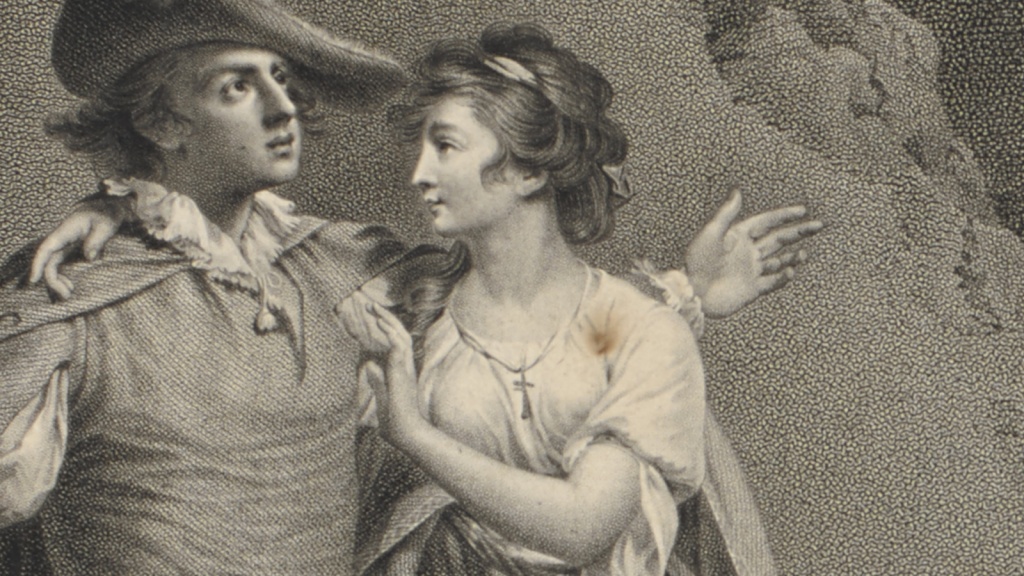
In many of Shakespeare’s plays characters meet each other briefly and fall instantly in love, hopelessly devoted to each other they are then prepared to go to extreme lengths to get or stay together. Whilst “the possibility of love at first sight” is another blog in itself and totally outside of the scope of this website, on the whole Shakespeare manages to get his audience to go with it. It propels the plot forwards and the actors often do a lot of work to convince us this is so. I wonder if Shakespeare’s name can carry the weight for us to allow him to get away with things we’d be harsher on with other writers? He certainly proved he knew what he was doing.
“The very instant I saw you, did My heart fly to your service; there resides To make me slave to it.” ― William Shakespeare, The Tempest
Compare that, and I’m sorry to lower the tone of this a little, with a plot point from a famous worldwide TV programme, in which after many years of being on air two characters who were just, let’s say, Friends, decided to become a couple. It didn’t work out in the programme and one of them went on to fall in love with the person she was created to be in a couple with (it ended years ago, get over the spoiler). But at the time few believed this new relationship, still to this day it’s become a joke of bad plotting.
NOTE: I just want to point out I fully know that my example is not in keeping with higher literary standards I set for this blog, neither am I much of a fan of said TV programme, but it was the best example I could think of. Please don’t judge me, laughing emoji (oh dear I’ve even introduced emojis now).
Back in the world of science-fiction lots of really strange ideas have to be sold carefully because they are so different from the reality. Often we like this because we want to step away from the ongoing normality that is this world, that makes sense, but it’s not an excuse for the writer to be lazy or push things too far.
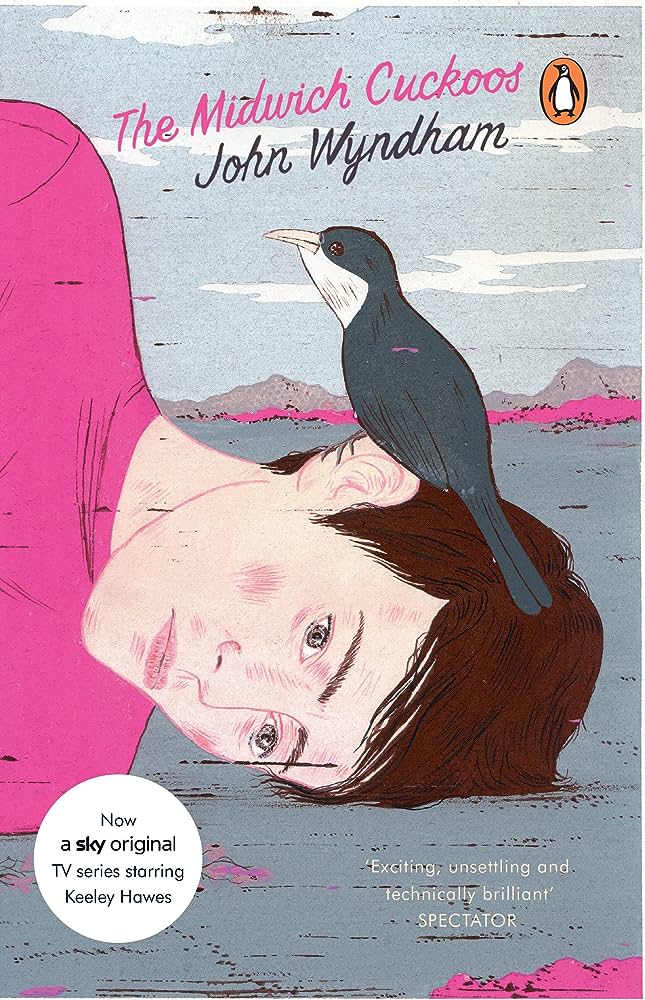
How about a story where a large number of women unknowingly fall pregnant by xenogenesis and give birth to aliens who begin to have mind control over everyone? It’s a bit of a far fetched idea, but The Midwich Cuckoos by John Wyndham is a deservedly classic and well loved novel. The reason for this is the way Wyndham tells the story, not just because he uses the first person but his characters act and react as if they really were in a small terribly English village of the 1950s. With so much that we know and trust already there, when use of subtle but clear explanations by Wyndham describe the strange we are just as willing to go with it.
“Mrs Brant had gone into Mrs Welt’s shop one morning to find her engaged in jabbing a pin into herself again and again, and weeping as she did it. This had not seemed good to Mrs Brant, so she had dragged her off to see Willers. He gave Mrs Welt some kind of sedative, and when she felt better she had explained that in changing the baby’s napkin she had pricked him with a pin. Whereupon, by her account, the baby had just looked steadily at her with its golden eyes, and made her start jabbing the pin into herself.” ― John Wyndham, The Midwich Cuckoos
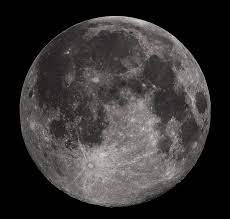
You might argue that because it’s science-fiction we are more open to unusual ideas, but does that mean we can just accept anything? I’m a big Doctor Who fan and over the years that programme has sold us the most absurd concepts, but is there a limit? In one episode first shown in 2014 we were asked to believe that the moon turned out to be an egg of a giant space creature. The episode was set in the future and at the end it hatched and immediately the new creature laid a new moon for us (I don’t care about spoilers here, the episode is terrible and again it’s been 10 years, almost). Elsewhere other creatures were said to be single celled organisms that couldn’t possibly be. At the time there was much derision over this with the makers trying to play the whole thing down claiming because it was science-fiction it didn’t have to be scientifically accurate. Whilst this is technically true, it still needs to have some credibility.
I whole heartedly agree this was an idea that should never have got passed the first writer’s meeting, but why do we find it so ridiculous? Especially compared to other things we maybe thought were clever? In 2005 it turned out the London Eye was a large alien transmitter, but we bought that one. So why is the moon as an egg too far? Like most things in writing I guess it’s a case by case issue. The context needs to be taken into consideration, can you do more silly things in a one off novel than in an ongoing series? It doesn’t seem a good enough explanation. Maybe some ideas just can’t be sold, no matter how hard you try. There’s a good lesson there.
One of the frustrating things about many good writers is that they’ve written more than one book. Yes I know that’s an attention grabbing first line, but bear with me as I explain the problems it causes, at least to someone one like me. I’m a completest. All or nothing. If I start something I have to finish it, no mater how long it takes.
In a non literary way I’m like this with music. If I like one album by an artist I have to them have them all. There are some examples where this is not the case, but that’s only the way things are at the present moment in time and I will always feel a weird kind of guilt about it, especially if I see a CD I need for sale (yes I still buy them) but decide to spend my money on something different. CDs are to some extent easy, I put them on and they play in the background for about 30 to 60 minutes. It takes a lot for me to get to the point to give up on an artist who is no longer producing good music. The same can be said for writers: if I like one book, I need them all.
The difference with a book, or course, is that it’s more of a commitment then just playing some music in the background; it’s hours and hours of concentration. Therefore there are some authors I haven’t yet to get to because they have written so much, Terry Pratchett for example. I’ve heard great things but I look at just how many books there are and I feel I need to at least finish Agatha Christie first.
Elsewhere on these pages, and therefore a few years ago, I wax lyrical over my love for Jerome K Jerome. You probably know Three Men in a Boat, and maybe Three Men on the Bummel- turns out he wrote a whole lot more. In my blog I’ve listed my favourites and I’ve read most of his works. This is where I have a struggle.
Years ago I found you can buy compilations of most of his books. The first one I saw was called 14 in 1. It did what it said on the tin, fourteen books in one volume. It was a good price and despite already owing both the Three Men books I purchased it. I was then introduced to more of his wit and a lot of quality writing. Of course I wanted each book as an individual, yet this was a good way to get some of the more obscure texts and in good condition too. I’ve read the whole thing now and loved it, thing is… it’s not the same size a proper book and it’s hard to hold and read. What’s worse is it’s not complete, there are other writings of his that I’ve yet to buy. You can get other compilations, for example A miscellany of sense and nonsense from the writings of Jerome contains some of what 14 in 1 already does but others that I am yet to read. Of course it has Three Men in a Boat and if I were to buy this it’d be the third copy I have of that story (what do I mean “if” of course I will buy it at some point, probably soon). More frustratingly Jerome K Jerome wrote short stories, some of which are published in anthologies alongside works by other authors, which just the idea of creates panic in me about how I’d store it on my bookshelf where an author’s books are all grouped together. I can read them online, but I want to own a proper copy!
In some respects all this is good as I still have more, and new as it were, stories of his to read – I just wish he’d been more organised in the way he published them!
Slightly less frustrating is George Orwell. I was killing time at Delhi airport many years ago and when I saw in a book shop a collection of most of his novels. Again I had a few of them already but it contained more that I didn’t and so I bought this thick tombe and was very soon able to finish reading it, again very difficult to hold. Orwell was somewhat less chaotic in that there are lots of essays and other things that aren’t included but I can get them nicely complied elsewhere and will do so. The two big books that were missing, Down and Out in Paris and London and Homage to Catalonia, were easy to get, I had one already. But I now have this large red volume next to two smaller, slimmer, books on my shelf and the ones I already had. I’ve read it all, but it looks wrong, such are the struggles of a reader, or some of us. I suppose the question is, are compilations better than owning the individual titles? I think not, sorry. But then, The Complete Works of Shakespeare…
Of course I want to enjoy more than one book by my favourite authors and sometimes feel a hint of sadness when I get to the end of someone’s works. A case in point is James Herriot for whom I only have one book left and keep putting off reading it as I don’t want it to end, I can always reread some and for sure I won’t remember a lot of his anecdotes, but it’s not quite the same.
Regardless, owning and having read the full bibliography of a writer can be rewarding and satisfying, but to get to that point can be frustrating.




 Arthur Hofn - Literature