How Not To Arrange A Bookshelf

I Don’t Think There Is One Easy Solution

I recently moved homes and as I had been living in a smaller place a lot of my books had been stored in boxes. This to me was a great tragedy, but now I have the space to have most of my books proudly displayed on bookshelves. In fact rebuilding the units and unpacking my books were the first things I did. (It always is when I move.)

My first very important rule is: only books on a bookshelf. I can’t cope with books and then ornaments or “stuff” placed in the remaining space in front, and books should not be put lying on their side resting on the tops of the correctly shelved ones. Some people’s arrangements can make me come out in hives!

My OCD would not cope with this.

To me this is all to be taken for granted, but I then hit upon the issue of how would I arrange my books? In my previous home, when I had the space to do it, I’d had this odd system of arranging my books by size, I’d done this for years. I liked the nice lines on the shelves. Where possible I had tried to buy books by the same authors in the same format so that they could all sit together, I had achieved this with my John Stienbecks and Graham Greenes but there were others that I had had to split. My James Herriots had on odd one out and there was so much difference in my Agatha Christies it was murder trying to organise them.

The thing is I’m not alone in this odd habit. During the first lockdown BBC News reported that a cleaner in a library had rearranged all the books, also by size. https://www.bbc.co.uk/news/uk-england-suffolk-52412655. Forget Dewey Decimal this makes more sense to me.

However as my book collection is now so random I’ve decided to rethink things. Alphabetical order doesn’t seem right so I’ve gone by subject, although I’ve still mostly separated fiction from non fiction. Therefore all my books on Ancient Greece are together just before my collection on Rome, my copy of Colin Thubron’s In Siberia is grouped with my books on the history of Russia, whilst George Orwell sits next to my complete works of Winnie The Pooh (I’m not quite sure how that happened).

The problem was it felt more correct to put Aesop’s Fables and Homer with my non fiction on Ancient Greece than with my books on modern Greece. Where possible I tried to keep author’s works together so Down And Out In Paris And London is in non fiction but now so is Animal Farm and Keep The Aspidistra Flying, this seems ok, but my Bill Bryson books are scattered amongst my several actual book shelf units which is a bit of an annoyance and it was about here that I realised it was all falling apart.

Andrew Marr’s A History Of The World should really be next to A Short History Of Nearly Everything, but that didn’t work. Then in the fiction, which was originally ordered by location, I reached things like E.M Forster’s A Room With A View which is set in more than one country and don’t start talking to me about anthologies.

Of course at the end of the day I know where to find a specific book when I need it and no one is actually going to judge me on this (you’d better not) so I can live with it… and where possible they are still in size order, but I continue to find myself fiddling with it all every now then, shaking my head and questioning why I was so stupid to put that book there and correcting it.

The same works for everyone as I believe a bookshelf is insight into the person, not just the titles of the books on it, but how they are arranged; so frankly do what you want with what space allows, and don’t let anyone else tell you any different.

I’ll probably always be changing mine, but that’s fine because not only do I enjoy reading but also, now that I have the space to properly display them (of which I am very grateful), I have fun arranging and rearranging my collection, because basically I love books.

Follow My Blog

Get new content delivered directly to your inbox.

The Deep Ways Of Thinking

I am no poet, I am no philosopher, I’m just trying to help you out.”

A little late but the 2020 Nobel Prize for literature has been awarded… and I’d never heard of her… sorry. Having done a bit of research, however, I decided that I approved of the selection (don’t have a go at me about that being pompous, we all decide if we agree with it or not each year – I’ve simply admitted I do).

Louise Glück is a poet from New York and one of the first things I discovered about her was that paper copies of her works can be quite expensive! I’ve read a bit online and I can appreciate what I’ve read of her work and overall the decision seems to have gone down well.

However here is another admission that I’m sure will reveal me for the fraud I am… I struggle with poetry. That’s not to say I don’t appreciate it, I understand it’s a very skilled and precise art-form, that a few lines can be a depth of emotion, knowledge and philosophy concentrated into a neat potion. My problem is I don’t always have the patience for it. A poem of just a few lines can be revisited again and again, considered and unlocked… this is my problem I haven’t yet trained myself to do this.

Places and geography are very important to me, I love travel, I mean I really love travel, my feet itch; what is over that horizon? Where does this road lead? Give me a map or an atlas and I can be lost for hours. I’m moving, I’m advancing. I love the journey, but the whole point is the destination, my goal. Then when I’ve achieved that I see the hill on the horizon and need to know what it the other side of that. Yes I can explore a new city, town or place for days or longer but I need to be moving to different location within that destination and soon I have the desire to be on the move again. To ask me to stay in one exact spot and study a river, street or a building for days, no matter how incredible they are, I feel like I’m missing out. I need to be moving again.

With books I can immerse myself and do all my thinking as the writer carries me along, it’s a long journey and I can look out the window and see the landscape as we go, I feel I’m getting somewhere. Poetry is the opposite, it’s looking at a line of words and digesting the meaning, the intent, my opinion of it, and then to go back again… as I say it’s a skill I have not learnt and I am somewhat envious of those that have it.

That’s not to say I don’t like any poetry, Dylan Thomas’ Do Not Go Gentle Into That Good Night is one I can go back to again and again, so to Dulce Et Decorum Est by Wilfred Owen (a school assignment forced me to for that one, but I benefited) and I have explored more of these and other poet’s works.

Good men, the last wave by, crying how bright
Their frail deeds might have danced in a green bay,
Rage, rage against the dying of the light.

― Dylan Thomas, Do Not Go Gentle Into That Good Night (extract)

In the last two blogs I spoke about my love of Shakespeare and he wrote a lot of poetry. I have his complete works and try to read them but I can only deal with a couple of his sonnets at a time; I still haven’t managed Venus and Adonis or the other long ones – which is odd because I can read a whole play.

Song lyrics mean a lot to me, but take away the music and I have a mental block.

Last year a pamphlet entitled Island Of Towers was published by the poet Clarissa Aykroyd. This appealed to me because many of poems are about places, and as I’ve said places are important to me. Some are set in and around London, we see the poet’s experience of the city and moments in time as well as its heritage (some Sherlock Holmes love surfaces in Sign). Other cities and worlds are opened up, other places to explore, to sink your teeth into, some I have been to, some new: Berlin, Cairo and Lisbon to name a few. With the subsequent restrictions and lockdowns, this is a way to travel, to discover a soul in these new worlds.

Under the hills swollen blue with water
I remember my coming and its why.
There was a plainness in the sky a light
to clear the mind of all that’s left behind.
― Clarissa Aykroyd, Wicklow Mountains After Rain (extract)

My favourite poem in the collection is Realpolitik, which is very clever in its use of lines and words, I stopped and paused and considered… maybe there is hope for me.

I’m sorry if my understanding of this art-form is limited, that I’m still learning here, but I suppose poetry is like novels in that it can’t all be grouped together and opinioned on as if it were all the same. There are poems I like, maybe I just need to work to find some more.

Buy Island Of Towers by Clarissa Aykroyd

Follow My Blog

Get new content delivered directly to your inbox.

Entertaining Shakespeare: Part Two – Shakespeare Who?

I completely get why some may be put off, but here is why I think you should give it a go.

Plague was filling the city and the country. Normal life was on hold. Theatres were closed. It’s been said many times that although we think that our circumstances are unusual, Shakespeare might disagree. It is said that whilst under a form of Lockdown Shakespeare was hard at work writing new plays, we can only guess this, but it’s either a motivation for writers or a somewhat depressing comparison.

On the previous blog I spoke about some of, what I think are, the most accessible of Shakespeare’s plays, as well as maybe the ones that maybe don’t always get the spotlight in the way that Hamlet or A Midsummer Night’s Dream do.

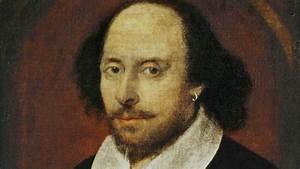
That post was about his Works, the whole point of what he was trying to achieve; which was it seems just making sure the theatre still had material and he could pay his way rather than looking for fame and immortality; in fact it’s likely that if he was brought to 2020 London and shown The Globe, the books and the videos it would be a massive surprise to him, let alone the fact his works are performed all round the actual globe in languages and countries he’d never heard of.

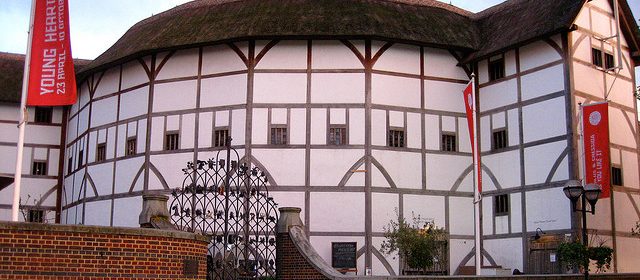
If you enjoy Shakespeare’s writings then of course the next step is to learn something out about the man. There are far more words written about him in many books and documentaries then he ever wrote himself. Of these there are two books I think that are great for either a starting point, or just a general containment of the facts in a clear and simple way.

First I’d recommend Bill Bryson’s Shakespeare (now subtitled The World As A Stage). Compared to some of Bryson’s works this is actually quite a slim volume, there is a reason for that. It seems there is a vast difference between what we think we know about Shakespeare, including myths and spurious stories, compared to what we do properly know as facts. Bryson (and the second book I will suggest) both avoid the apocryphal, only commenting on a myth to debunk it. No there isn’t any evidence that it was someone other than Shakespeare that wrote the plays, as a conspiracy it’s just an invention by people at the start of the 1800s and only hangs around for nay-sayers to point and feel superior.

Instead what we are given is the what facts we do know, or have a good chance of being true, most interestingly we have the context of the times and society as it was. It’s clearly written, the text is informative but not heavy going, and I’d suggest it’s one of the best books on Shakespeare’s life that I have come across. Chronological in it’s format it follows the life of this man as best we know it, including the impact that he was had on you and me which maybe we don’t know. You can read it in a couple of days even if you are taking it easy. The only slight issue I’d have is that, in my copy at least, there is no index so trying to find information again means wading through it once more. That aside this is a very good book.

“Perhaps nothing speaks more eloquently of the variability of spelling in the age than the fact that a dictionary published in 1604, A Table Alphabeticall of Hard Words, spelled “words” two ways on the title page.”
― Bill Bryson, Shakespeare: The World as Stage

The other book I’d recommend is Shakespeare On Toast by Ben Crystal. It might be an odd title but the point of it is that the information within is supposed to be easy, like a lunch of beans on toast. The first part of the book certainly delivers this promise and compliments Bryson’s volume in that it either fills in gaps or provides the same information but from the view of a performer rather than a historian. This would make sense as Ben Crystal is an actor.

There is an index in this book, as well as charts and simple boxed out explanations that make reading this in short intervals possible. Again the author goes to lengths to make sure what he is presenting is as accurate as possible. He also takes up the whole of Elizabethan life that is relevant and condenses it down to the basic facts that once known adds so much more colour to Shakespeare’s works. Did you know the difference between thou, thee, thy and you? Did you realise that the word “table” used to mean “notebook”?

It’s fascinating stuff… then you get to the second half of the book. Deciding to drop the general facts Crystal becomes a little obsessed with the rhythm of Shakespeare’s dialogue, this is NOT a bad thing because after reading just the first few pages of this explanation, you will too.

Crystal unlocks entire secrets hidden in Shakespeare’s works that actors would have seen all along. No I don’t mean conspiracies against the King or Queen, I mean stage directions that add a whole other dimension to the scripts. Because these are scripts not prose and Shakespeare wrote them for his friends to read and perform they would have had shortcuts that the actors would have understood but we wouldn’t.

What is iambic pentameter? How does the way Shakespeare used it to write the lines of the script show the personality of the characters? Trust me that might sound like a snore, but it’s so well explained, not just informative but entertaining. It’s a real revelation in Shakespearian writing, and you may find you attempt to speak or write in one of the pentameters for a while after, or is that just me?

“The Elizabethans watching one of Shakespeare’s plays would be relatively unaccustomed to seeing pictures or images – save perhaps a sign outside a tavern, a portrait or tapestry. In our time, unless you make an incredible effort, it’s impossible to turn a corner without seeing a photograph.”
― Ben Crystal, Shakespeare On Toast

For one of England’s most famous people it’s surprising how little we know about someone who has literally changed all our lives in one way or other, even if it’s just using the words he invented.

Buy Shakespeare (The World As A Stage) by Bill Bryson
Buy Shakespeare On Toast by Ben Crystal

Follow My Blog

Get new content delivered directly to your inbox.

Entertaining Shakespeare: Part One – Not Boring

I completely get why some may be put off, but here is why I think you should give it a go.

Every year I go and see at least one play by Shakespeare at the Globe. I love Shakespeare and have (in one form or another) seen all of his plays – lets not get into the cannon discussion but I include The Two Noble Kinsman. If you’ve never been and are in London (at a time when viruses are not playing havoc with society) I’d highly recommend an evening at The Globe Theatre. Tickets are very reasonably priced especially if you are standing. Personally I always book well in advance and get a seated ticket, you’re not in the main crowd for the fun and danger of being picked on by the actors, but at least you can sit down and as some of the plays can be long it’s worth the extra money.

It’s all academic at the moment anyway as they have, reasonably and understandably, currently shut their doors to the public until further notice. 2020 will be a gap in my unbroken record of many years where I have seen a play there at least once (it’s not the only thing that I have an annual tradition of that will be missing this year). It didn’t have to be because as well as the outdoor theatre for summer performances there is the very cool Sam Wanamaker Playhouse, an indoor intimate theatre for telling tales in the winter season, and I could have gone in January to see something.

However that doesn’t mean we can’t enjoy Shakespeare, there is the Globe Player (https://globeplayer.tv/) where you can stream from a catalogue of previous performances, it’s well worth it! Other theatre groups and performances are available and also worth looking out for, the RSC have teamed up with companies hosting streamed plays for example and there are some excellent options.

The suggestion of Shakespeare can turn people off, maybe they had to wade through it at school, or they are put off by the old language. I fully get that this can be overwhelming but I would still recommend you to watch at least one play to try it out. I say watch because for many who read it they find it hard to follow, this is because it’s not supposed to be read, it’s a play, it’s supposed to be watched. There is joy in reading the texts but this is not how William intended the public to access his work (yes I did just refer to him by his first name!). The scripts were meant for the actors so they could perform it.

The next question then is which play to see? There are around thirty-nine of them so just taking one at random can be fun, but as some are heavier going than others if you start with one that isn’t quite your thing you might be put off. Of course it all comes down to what you like. A few years ago the BBC had a success with the English Historical plays, broadcasting them as films in two cycles of three parts. Using well known actors these, although long, were very watchable and again if you are able to see them somehow you really should.

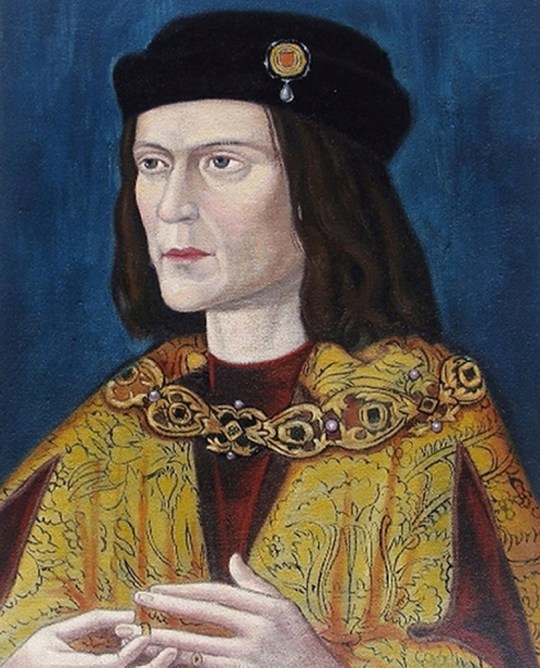
Going under the umbrella title of The Hollow Crown the second cycle (about the Wars of the Roses) is a great entry point, the last of the three films is an adaption of Richard III with Benedict Cumberbatch in the title role, this is one of my favourite plays anyway but this adaption still had me on the edge of my seat. If you’re thinking you are not a fan of history, I’d say although this is history (with a lot of poetic licence) it’s as compulsive viewing as many a period drama.

“Now is the winter of our discontent
Made glorious summer by this sun of York;
And all the clouds that lour’d upon our house
In the deep bosom of the ocean buried.”
― William Shakespeare, Richard III

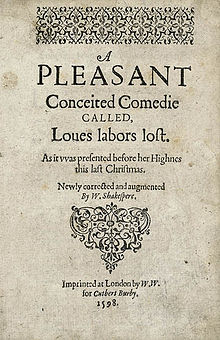
If that is still sounding a little hard going some of the Comedies are shorter and lighter work. Personally two of my favourites are Love’s Labours Lost –four students vow to give up seeking women so they can focus on study… then they meet the new neighbours and that vow suddenly seems hard work – the Globe version on their Player had me keep having to pause it as I laughed so much at various points, and The Comedy of Errors – deliberately confusing cases of mistaken identity as two sets of twins (who were separated at birth) all happen to end up in the same city at the same time but don’t know it… and much hilarity ensues. The Comedy of Errors is his shortest play; to put that in context Hamlet (one of the most well known plays) is his longest at over twice the length!

“They have been at a great feast of languages, and stolen the scraps.”
― William Shakespeare, Love’s Labour’s Lost

Although there is a lot of concepts about exactly what a Shakespeare play is, when you investigate you can see how diverse they are. The old idea of putting them all in one of the three categories of Comedy, Tragedy, and Historical doesn’t really work as many of the plays blur those lines. Earlier I said there are around thirty-nine plays, the reason there isn’t an exact number is because there is discussion over what counts as a Shakespeare play; some were co-written, for others he was part of a team of writers and may have only contributed a little and there are cases where for a couple of plays it’s not exactly certain how much involvement he did have. To be honest if you are just wanting to be entertained I don’t think that’s something worth worrying about, most of the obvious ones are by him so there is no conspiracy here, something I’ll go on to discuss in the second part of this blog.

At the end of day the idea that Shakespeare is boring, I believe, is because many were forced to read the dry texts at school and then analysis them. This is, as I said, not what was intended when they were written. To enjoy Shakespeare you need to watch it live, we can’t really do it that at the moment but I highly recommend tracking down at least one of his plays online, you may discover it’s a lot more entertaining than you realised.

Buy The Complete Works Of William Shakespeare
Watch Shakespeare’s Plays

Follow My Blog

Get new content delivered directly to your inbox.

Dystopian Battles

Orwell vs Huxley

Dystopia is a whole category of fiction in itself, there are countless books creating dark and twisted societies based on authoritarian overlords and the such. If you were going to boil the whole genre down there are two books that, to my mind, define the whole concept. Nineteen Eighty-Four and Brave New World – both have probably been studied and cross examined multiple times by those who love the style, but I wanted to highlight both novels for those that maybe know about them but haven’t got to round to reading them yet. Obliviously there are others, I chose to study Fahrenheit 451 as my novel of choice for my GCSE, but I don’t have the space to list all of them here; add your suggestions in the comments if you want to.

There is a warning, it’s hard to properly discuss the stories and not give too much away, I’ve tried to keep it to a minimum but anything I think that is a spoiler I will put the text in light blue so you can avoid it if you want to.

Personally I quite like the idea of twisted version of our reality, and the concept in building these worlds is either many subtle, or one blatant, change to our history; for example in Philip K Dick’s The Man In The High Castle it was the Nazis that won World War Two. Often the reason for creating such worlds is that the author is writing to make a point about our way of living but taking the concepts they want to highlight to the extreme, if we are not careful this COULD happen or even this IS happening but it’s hidden from our view therefore the story is a way of pointing out what to look for.

For me to just put both Nineteen Eighty-Four and Brave New World together doesn’t mean they are the same, in fact I picked them 1) because to me they really are the obvious two and 2) because they are very different in the way they go about telling their tales.

Nineteen Eighty-Four by George Orwell was mainly written between 1947 and 1948 and would be the last novel Orwell would publish.

The plot follows Winston Smith, who at the start works for the government in the Ministry of Truth, however as the book goes on you see there is more to the man than just a drone for the dictatorship. The plot stays with the main character however through his eyes we see the world as, at best turning it’s citizens into the unquestioning oppressed and at worse torturing and destroying anyone who even remotely disagrees. It’s from this book that we really get the term “Orwellian”. The Cambridge Dictionary defines this as “used to describe a political system in which the government tries to control every part of people’s lives”, and that isn’t the only major vocabulary to our language that this book has contributed; Big Brother and Room 101 are both phrases that conjure up the concepts that are now understood by people who may have never read the book or watched the film.

We also see the ludicrousness of the extent that the Party goes to to keep everyone controlled; Winston Smith’s job means rewriting history just to suit what is appropriate for the day, if it needs to be rewritten again tomorrow then so be it and woe betide anyone who gets their history wrong.

There is a lot of other ideas which have seen fruition in our world although maybe not in the way Orwell intended, but it’s surprising how far-sighted this novel is, not just to 1984 but even to our day.

“Perhaps a lunatic was simply a minority of one.”
― George Orwell, 1984

Nineteen Eighty-Four is the the world of obvious dictators and rebellion. Brave New World is something even scarier. Taking it’s title from Shakespeare’s The Tempest Aldous Huxley’s novel hasn’t added to our language in the way George Orwell did. It’s older, written in 1931 and published in 1932, and set in 2540 – but uses a different calendar.

Here everyone seems happy or at least content. As the world is explained to us the plot centres on a wider cast, one that shifts the importance of each character as the novel progresses. For the most part despite there being a little dissatisfaction, people are shown believing they are at a peak of achievement and happiness, there is not a tyrant to fight instead it’s a system to sit back and think about how good everything is.

Even those that question it are not hunted down but are accommodated to some extent as long as they are out of the way; this is to the point that when someone truly wants to disengage he totally fails to get anyone else to see the problems that he considers are real.

Rather than using the stick this government has used the carrot to control and has been successful in the way that Nineteen Eighty-Four’s authoritarian class fail, hence their need for the likes of Room 101. What is a darker view of a despot society, one that uses torture on it’s resistance, or one that doesn’t need to because no one can see anything wrong? There are arguments for either answer.

“Words can be like X-rays if you use them properly — they’ll go through anything. You read and you’re pierced.”
― Aldous Huxley, Brave New World

Both show a 1930/40s view of the future, from 80 odd years onwards it’s fun to think about not just that our world is might coincide with some concepts from these books but also how it is different, not just from the obvious but in the way opinions, language and concepts that were assumed to survive have actually be lost or updated; some for the better, some for the worse.

If you’ve not read these books I’d highly recommend both, if you just want to try one… well give Nineteen Eighty-Four a go, not just because of the contribution it has made to 20th and 21st Century (I was going to say Britain but it’s more global than that), but also as it might give you a taste to try some more.

Buy Nineteen Eighty-Four by George Orwell
Buy Brave New World by Aldous Huxley

Follow My Blog

Get new content delivered directly to your inbox.

Indoldrum – Out Now!

My new novel.

My new novel Indoldrum is now out! After a long period of writing, redrafting, editing and proofing I realised I was at the point where I could unleash it on the world. It’s available on Amazon and for the weekend of 8th and 9th August 2020 the e-book will be free of charge. Just follow the links on this page to the Amazon webpage and download it. – It is also available as a paperback.

Johann might be lost, he isn’t sure. Battling Ménière’s disease and severe hearing loss is hard. Some of the strange new people in his life make him feel uneasy and he’s not sure why. Where have these people come from? What do they know about him? And is there something wrong with time itself? His in-laws have lost their cat, it’s an event which triggers unforeseen challenges and raises questions he’s just not ready to deal with. Johann loves his wife Harriet, she’d help him; but Harriet is dead and the world has ended in more than one way.

This is the first time I have written in the first person and it was an interesting challenge that I really enjoyed. The novel follows the character of Johann and his wife Harriet. However when we meet Johann he is a widower and the loss of his wife is something that he is struggling to deal with. It’s harder because he also suffers from Ménière’s disease, an issue which affects the balance centre of the inner ear causing severe dizzy spells that can last for hours as well as hearing loss. I decided to write about this as a few years ago I was diagnosed with it.

However there is more going on than that. I don’t want to give away too much but there is something wrong with Johann’s world, the laws of physics aren’t quite making sense. There’s a few mysteries to be solved including a person who appears in Johann’s life who will… well I won’t say too much, but who exactly is he? Why is he acting so strange?

Mainly though the novel is about loss. Harriet’s illness and then death casts a large shadow over everything that happens to Johann. That’s not to say it’s all sad, he tells of the happy times of marriage and the reasons for the love of his wife and his adoptive family of in-laws.

And so the evening followed. I’d been taken pity on for having no friends at the wedding even though I actually did have friends in my normal life. We did chat and her friends were nice and then I was dragged to the dance floor and made to humiliate myself to music I never listen to and I so wanted the evening to last forever and I so wanted to go home and hide forever.
We exchanged numbers and I decided that the best thing to do was to change my number the next day. Of course as an over-reaction it might give me away and I realised that as there was little danger of her actually calling me I shouldn’t worry so much. Until she called me.

I made it back to the table with two double whiskies and several packets of crisps. In all the excitement we’d not had anything to eat since a break in the music when we’d gorged ourselves on beef burgers.
‘So do you want kids?’ Andrew had finished his pint.
‘Yes.’
‘And…’
‘And an Aston Martin. Overall it’s cheaper than children but Harriet won’t let me have one.’

Sally and Felix were there and I felt it was nice as they weren’t family or work colleagues or whatever, instead they were people who only had ever seen Harriet and myself as one unit. We were the couple next door, not Harriet and the one she’d married or their old manager’s husband or even their colleague’s wife. Their being there represented the death of our marriage, not just the death of one person and I needed that.
As always Sally was wonderful, she understood I needed people to feel what I was feeling so she openly wept, sharing the grief, and I felt better for it.
After we had tea and cake at a village hall overlooking green fields and then it was over. My life, forever changed, was moving on. This my past was now my past and my future waited unknown and unwanted.

It’s deliberately written out of chronological order but it is written in an order which slowly reveals what is going on. This was something I realised I could do by writing in the first person.

I’m very happy with this, my third full novel, and I hope you will enjoy reading it. And remember it’s free on the 8th and 9th of August.

Buy Indoldrum by Arthur Hofn

Follow My Literature Blog

Get new content delivered directly to your inbox.

Belize It, It’s Great

The literature of this Central American/ Caribbean nation.

Belize isn’t a country that gets much attention. Bordering the Caribbean to the east, Mexico to the north and Guatemala to the south and west, most people know little about this Central American country. This is a shame.

Zee Edgell

A couple of years ago I lived there for a short period of time. Based in the capital Belmopan, in the middle of the country, I got to know the locals, the way of life and the land relatively well.

It’s a very friendly place, people are laid back and have time for each other. It took me a while to realise I was being actively rude not greeting everyone I passed by on the street.

It’s a small place, the population is just under 400,000 spread out over just under 9,000 square miles – including a few more densely populated areas such as Belize City and Santa Elena/ San Ignacio; the result is there are vast tracks of green open nature, thick forest, stunning mountains and beautiful islands, beaches, rivers and sea. Well maybe guarded by the jaguars.

Of course having lived there for a while one of the things I wanted to know about was the literature. Although in the capital I did find trying to buy books a difficult and expensive task it didn’t mean that there isn’t a literary heritage to this land. Simply asking around I came across the same answer over and over again.

Beka Lamb. This is a novel held with pride by nearly every Belizean who I spoke to about the subject. Written by Zee Edgell and published in 1982, many see this book as Belize’s contribution to quality world literature. Scratch the surface and there is a whole lot more, but this was the one that I came across again and again.

This is the story of a fourteen year old girl who lives with her family in Belize City whilst it was still a British colony. Themes of politics tick away in the background as the adults all have their opinions and find ways of expressing them. Beka Lamb herself is more concerned about her friend Toycie and her school work. Although the title of the book is Beka Lamb, and we see the world through her eyes, as well as seeing how she herself develops she is also there to provide the insight into the adult issues and concerns that her neighbours and family are dealing with.

This is a gentle story, but it’s incredible looking back exactly how much happens in it. For those not familiar with the Belizean way of life it’s a great window into this culture and even though it is set in the 1950s and was written in the 1980s there is still a lot about the way this nation’s culture is depicted that is still alive and well today. I didn’t spend too much time in Belize City so although I could recognise the people, the geography was unfamiliar to me – but looking at Google maps, many of the locations are still there; Battlefield Park and Baron Bliss lighthouse for example.

What Beka recognized in herself as ‘change’ began as far as she could remember, the day she decided to stop lying. Things were getting almost beyond her control. She sat on the top step of the back porch that April Friday, seven months earlier, eating crayfish foot left over from tea and contemplating her latest, worst lie.
― Zee Edgell, Beka Lamb

My brilliant Belizean writing companion, Snuggles; he wouldn’t keep still for a second!

I lived in the new garden city of Belmopan, built inland to replace Belize City as the capital so it was less at risk of hurricane damage, of which there is a history.

I’d spend the hot evenings and nights typing away at my own novel, Framed Of Rathgar, into the early hours of the morning accompanied by the neighbour’s two dogs, Sheba and Snuggles, waiting outside my window for attention with a glass of rum from the local supermarket (that’s I had the rum not the dogs). It was the writer’s dream! In hindsight I should have written a novel set in Belmopan rather than Dublin whilst I was there, but maybe I’ll get round to it one day.

There are many different ethnic groups of people who live together in Belize; Maya, Creole, Garifuna, Mestizo and Mennonites plus others. The Garifuna have a very strong culture that is especially active in places like Dangriga, Hopkins and Punta Gorda. They have their own language, customs and writers.

Zoila Ellis

Zoila Ellis, herself Garifuna and born in Dangriga, is another writer who is championed; specifically her anthology of short stories, On Heroes, Lizards and Passion, is held in high regard. Set across the country and even in New York, these are seven viewpoints on life as a Belizean. The Teacher deals with a man who is trying to place his past in context, although the terrifying experience of losing all his books to a flood is what gave him my sympathies. There’s a lot of strong women trying to navigate their way through life… and a very bizarre story about lizards.

“I can assure you that unlike other women who may have come here before telling lies about their marital and financial status, I am above such things. My mother and sisters have, I must admit, done something wrong but must I be punished for that?”
― Zoila Ellis, On Heroes, Lizards and Passion

When the characters speak for the most part they use Belizean Kriol, whilst this is true of Beka Lamb it’s more the case here. When reading this, if you are not familiar with it, it can be a bit disconcerting at first, that is until you get the hang of it – if you can read English well you’ll soon pick it up and realise you can read a whole other language. When I lived there I got used to hearing people talk to each other informally in Kriol and it’s very easy to understand, although I never tried to speak it despite encouragement.

Examples: How me mek latta jonny cake and fry fish fi eat dis evening afterwards.

Both books open the door to a country whose many cultures we don’t come across too often and as such play an important part in the world literary scene.

Buy Beka Lamb by Zee Edgell
Buy On Heroes, Lizards and Passion by Zolia Ellis

Follow My Blog

Get new content delivered directly to your inbox.
The Satellite Blog

Expanding to music.

I’ve really been enjoying have a literature based blog. I love books and the opportunity to share some of my favourites is something I’m having a great amount of fun with. I also love music. The whole music industry is much more expanded since things went online, there is so much more ease in variety of what type of music you can listen to, where it comes from and what format to use.

The result is there is an abundance to discover. I regularly find new things, even if it’s been about a while and it’s just new to me, so as I do the same with books I thought I’d expand to music as well and post about the things I love.

I’m putting it all on a satellite blog, so if you just want writing that will still be the focus on these pages.

The new music blog is here: https://arthurhofn.wordpress.com/

I really appreciate those that follow me here – thank you, I’d love it if you could also follow the new blog (I’ve kept it separate so those that do follow me here are not getting twice the amount of updates if they don’t want them – but that means if you do want to discover some interesting music from the new blog then you’ll need to follow that as well).

It’s still early days so at the moment there is only one or two posts up and like this site it will evolve over time; but I can assure you it will be varied and there are some great things coming!

Follow My Literature Blog

Get new content delivered directly to your inbox.
Three Men And A Whole Lot More

The often overlooked humourist.

One of my favourite eras is the late Victorian/early Edwardian times. Just beginning to lose the tightly controlled Victorian veneer of stuffiness it still had a charm and a formality but was much more relaxed. I love the fashions and if I could afford to dress the way the men did back then I would (hey I stopped caring what people thought about me ages ago) – although I’ve always thought it might become a little hot.

This love for that era of course affects and is affected by the literature that came out of it and this includes one of my favourite writers of all time. Jerome Klapka Jerome. Most famous for his work Three Men In A Boat, Jerome was a writer and humourist. Born in 1859 his sense of silliness and comedy make his works highly entertaining but are clever enough to give a great insight into his way of life, those of his generation and their way of thinking at the time. But as well as humour he proved adept at writing thoughtful novels such as All Roads Lead to Calvary.

To give it the full title Three Men in a Boat (To Say Nothing of the Dog) is a series of accounts of the said three men as they go on a boating holiday up the River Thames getting as far as…, well I won’t spoil that. Published in 1889, the three men discover not to always take the advice given to them by people who should know better (do not drink river water) but they also discuss their past experiences by way of deliberately straight faced anecdotes; everyone knows an Uncle Podger and have experienced laughing at the wrong time. All highly entertaining.

In 1900 it was followed up by, the I think even better but sadly lesser known these days, Three Men On The Bummel (where they go on a cycling holiday in Germany: Bummel said to be a German word for a trip that just happens with no major plans for where to go or how long it takes – turns out I take them a lot). Once more present and past events are discussed in all seriousness, that person who always “knows” how to fix something that doesn’t need fixing and disagreements about directions plus a whole lot more. If you like intelligent silly I’m sure you will love both of these.

“If a man stopped me in the street and demanded of me my watch, I should refuse to give it to him. If he threatened to take it by force, I feel I should, though not a fighting man, do my best to protect it. If, on the other hand, he should assert his intention of trying to obtain it by means of an action in any court of law, I should take it out of my pocket and hand it to him, and think I had got off cheaply.”
― Jerome K. Jerome, Three Men On The Bummel

Jerome K Jerome wrote far more than just these two books, and it’s sad that so much of his work is almost forgotten. He wrote humorous essays for magazines and some serious fiction. Both the novels Paul Kelver and All Roads Lead To Calvary highlight the life of the main character trying to make their way in a difficult world, both failing and succeeding at different times.

He himself was born into poverty and a hard life followed including the death of his family at a young age. Then as a young man everything was uncertain and it was only really the sudden success of his writing that upped his standard of living. As much as I say I like the style of those times, they were very difficult to live through. Unless you were very rich everything was always precarious. Paul Kelver is said to be practically autobiographical, you can get a sense of his experiences and just how tough things could be compared to what most of us take for granted now. Although his writing is known as fun when genuinely playing it seriously you get a glimpse of the melancholy.

You poor, pitiful little brat! Popularity? it is a shadow. Turn your eyes towards it, and it shall ever run before you, escaping you. Turn your back upon it, walk joyously towards the living sun, and it shall follow you.
― Jerome K. Jerome, Paul Kelver

They And I is lighter in tone. Written in the first person this also has links with his real life and I hope more is true than is made up; it seems happy. The account is of a father moving to the countryside with his young family and the adjustments that are needed – it’s very amusing.

Jerome K Jerome’s final resting place, with is family in Ewelme, Oxfordshire.

Jerome did own a farm house near the small village of Ewelme in Oxfordshire, where he and his family are buried, not far from the River Thames.

I genuinely love nearly everything I’ve read from Jerome K Jerome, even his essays are preserved and worth reading. Some are funnier than others but there is always the sharp wit of observation supporting his words. As a nation I think we don’t give him the attention he deserves, we know of Three Men In A Boat and something in it about Hampton Court Maze but on the whole that’s about it; this is a shame.

Buy Three Men In A Boat by Jerome K Jerome
Buy Three Men On The Bummel by Jerome K Jerome
Buy Paul Kelver by Jerome K Jerome

Follow My Blog

Get new content delivered directly to your inbox.
Slow Reads

The gentle stories.

Ever since the rise of McDonalds and their kin the word fast has become synonymous with lesser quality. I don’t always agree, and even when the “fast version” isn’t the luxury type there is still a place for it. A few years ago a winner of the Eurovision Song Contest got criticised for claiming the majority of music these days is “fast food” music. He might have a point that the music industry can favour the ephemeral and speedily lucrative at times, but there is still quality out there and sometimes you just want fun.

The same is true with books, not everything has to be a classic, or a potential award winner, sometimes you just want something light and easy, something “fast”.

Having said all of that the criticism can work the other way too. Some books are “slow” – they take their time to build, are gentle in the way they tell their story and don’t always spell out everything, It’s very easy to label these “boring” or state it doesn’t go anywhere and needs more action. The fact is there are so many different types of books because they appeal to a variety of people and some are written for a slower audience – no, let me restate that; a book shouldn’t always have to have roller-coaster dynamics, those without will be appreciated by some – so let us have them.

Personally I like slow books. I like to gently follow the story and the characters. That’s not to say I don’t like “faster” books with action and adventure, yes I do – but I see a place for the full spectrum.

Some of the books I’ve heard other people mention that they found “dull” (or other similar expressions) I’ve loved, in fact some are well established to be “good reads” for someone to come along and state “I don’t know what the fuss was about I found it boring and gave up.” Well fair enough, we all have different tastes but in this blog I’m going to stand up for two “slow” books and if you like that type of thing, I’d recommend them.

Described by some as “pretentious” and “banal”, instead I found The Elegance Of The Hedgehog by Muriel Barbery to be thoroughly enjoyable. Originally written in French (but available in several languages) and set in Paris in the present, this is the story of an older woman called Renée. She has a so called “lowly job” as a concierge in a block of apartments and no one really pays her much attention. This is just the way she wants it, in secret she is highly educated and very well read. It would be easy to take a story about a person with hidden intelligence and make it pretentious, but this is not the case here. The author isn’t trying to show off but just tell the story of people who are overlooked or like to hide. There is some but not a lot of action, the slow pace through the lives of the people who live in the apartment building builds characters whose lives overlap in the building they share. The gentle nature of the story contrasts with the deeper concepts that are going on underneath. I get this might not be everyone’s cup of tea, but if you do like slower reads I’d recommend this.

“People aim for the stars, and they end up like goldfish in a bowl. I wonder if it wouldn’t be simpler just to teach children right from the start that life is absurd.”
― Muriel Barbery, The Elegance of the Hedgehog

Another book that seems to split opinion is An Artist Of The Floating World by Kazuo Ishiguro. To be honest when you’ve won the Nobel Prize for Literature that’s enough of an argument; sometimes just because we don’t like something doesn’t mean it’s bad – it’s just not to our taste.

This novel tells a story of a Japanese artist during and after the Second World War. Big events are hinted at subtly, strong concepts are left for the reader to consider without being underlined. In real life the way world history touches everyday people can seem mundane when you don’t consider the context. Here we are told the story of a man who lived through such events and was affected by them to suddenly find the whole perspective of his life has changed and he is left find a way to cope. It might be a look through the microscope rather than the full canvass, but that is the whole point. Every big epic hides thousands of lives forever changed with consequences that will live on. How does the choices people make to deal with the past identify them in the present?

Not everything is spelled out but that makes reading it become more like the way we see other people and as a result it’s a slower read, but one that is worth putting the effort into.

“For however one may come in later years to reassess one’s achievements, it is always a consolation to know that one’s life has contained a moment or two or real satisfaction”
― Kazuo Ishiguro, An Artist of The Floating World

Literature should cover the spectrum and the fact that one type of book doesn’t appeal to us is what makes the mosaic of works so colourful (if you’ll forgive me mixing my metaphors); it would be boring if we all liked the same things. Either way not every book has to be a classic but equally there is space out there for the slower reads.

Buy The Elegance Of The Hedgehog Paperback by Muriel Barbery
Buy An Artist Of The Floating World by Kazuo Ishiguro

Follow My Blog

Get new content delivered directly to your inbox.