I know, writing about Lockdown is a bit passé so my defence of the following is, I wrote this short play in late 2017; therefore I’m just showing off my weird skills of premonition. It depicted the way I saw society was going long before viruses sped up the process. People living their lives without leaving their very small apartments and their work, hobbies and social lives all conducted over the internet via a tablet.
The whole point of the play was to show a slightly dystopian future, little did I know that just over two years away the concept of the story would become commonplace, meaning it’s not so much of a plot anymore, more just a statement of 2020. What was intended to be an interesting concept is more run-of-the-mill now.
JEFF – Yeah fine, I’m in the middle of work so don’t have much time. Got a million things on.
DAN – Well that’s the benefits of being a man of leisure.
JEFF – Watching box sets all day on Netfilms and calling me when you are bored?
DAN – Not just you. Don’t think yourself special, I have a vast social life.
JEFF – So do I, and I’ve got more friends than you do.
DAN – Yeah but you’re a Requester. I’m an Accepter – I can’t remember the last request I sent. I get so many requests there’s some I’ve no idea I’d accepted, must have chatted to them somewhere before, some forum or other.
JEFF – So are you interrupting my working day to show off about your friends or that you don’t have a job?
DAN – I’m happy to do either, but was wondering if you were free this evening. – Breaking The First Wall – Arthur Hofn
Until the 31st of July I have decided to give it away as a free PDF, which is attached.
As it is now after the 31st July 2020 you can find the play in Scene From My Mind, please see below.
The play itself is one of seven that you can find in my book, Scene From My Mind: An Anthology Of Seven Short Plays which I published earlier this year and all seven plays are for available for just £1.99 on Amazon here (or on the various links on this blog). – Also available on your own country’s Amazon if outside the UK and you wish to get it from there.
I’m just really hoping some of the other plays don’t come true…
On my last post I spoke about how I prefer to know as little as possible about a book before I read it. This goes for most other things as well, TV programmes, plays and films for example. Whilst most people don’t want spoilers I’m probably at the far end of the scale, which I know is strange but I seem to get on fine.
What I can’t get my head round are the people who happily tell me that when they are looking for a new book, whilst they are in the bookshop, they will turn to the last page and read that as a way of deciding if they want to buy it or not. If you are one of those people please explain how this helps you, I’m genuinely interested to see how other people go about this.
I don’t really read the back of a book before I’m at least two thirds of the way through it, at which point I reckon it’s safe. As stated I prefer to see the plot unfold from not knowing anything. I love the moment when it dawns on me “so that is what this book is going to be about”.
On this blog, whilst I try and tell you about books I love, I also try and not give away that much in the way of plots. Hence this is never going to be a detailed analysis of the books – I’m aiming at just offering a taster and you can then find out as much or as little as you want. I’ll generally always put a link at the bottom of the post of where the book is for sale so you can read the blurb if you want to (although ironically not on this one).
Whilst this works for my reading it‘s a problem when it comes to try and promote my novels, I just fear saying anything is giving away too much. Of course that is the way to completely not promote anything. I can’t work on the basis of “just do what I would want” which is a principle I use for most things connected to my writing. I’d personally want just the title and a blank page. At most maybe a few random lines.
At first when I tried to send my manuscripts off to agents I would try to write the synopsis, but all the time I had voices in my head screaming at me not to give away the ending or the twists and plot developments, that was never going to work. I’ll only read a synopsis of a book I’ve finished or have no intention of starting.
My current WIP is a novel called Indoldrum and I’m very happy with it. It still needs a bit more work but I’m at the point where I need to start writing promotional things, the back cover, the Amazon blurb etc and it’s really difficult. At the moment I’m on:
Johan might be lost, he isn’t sure. Battling Ménière’s disease and severe hearing loss is hard. Some of the strange new people in his life make him feel uneasy and he’s not sure why. Where have these people come from? What do they know about him? And is there something wrong with time itself?
His in-laws have lost their cat, it’s an event which triggers unforeseen challenges and raises questions he’s just not ready to deal with.
Johan loves his wife Harriet, she’d help him; but Harriet is dead and the world has ended in more than one way.
It needs some more work, but for each plot point I’ve put I regret that a reader won’t learn them by just reading the book. The reveal that Johan is losing his hearing because he has Ménière’s disease, a condition that I have, isn’t stated straightaway and is only hinted at to start off with. I wanted the reader to notice something was wrong and then try and work out what it was. In most other books, because it is still relatively early in the book it is mentioned it would be a selling point so I have to fight my inner voices and go with it – but I’m not happy as it undoes all the natural building I put in place. Also the time thing… But that is how books and their promotion work.
I don’t suppose it really matters at the end of the day. I’ve tried to think of occasions where I’ve accidentally discovered more about a book than I wanted to and felt some disappointment. I know it’s happened but in trying to think of examples I can’t really come up with one that is worthy of note. Therefore I’ll just put this down to another one of my strange quirks and try and get on with it. But how do you define the correct amount of spoilers for the back of a book?
Ironically there may be some spoilers in the following blog. Earlier this year I finally got round to reading Curtain by Agatha Christie. In general I love Christie’s books and with so many of them it took me a while to get round to Curtain. However there is something different about this particular novel.
Curtain is subtitled “Poirot’s Last Case”, and although it was written in the early 1940s the book wasn’t to see publication until 1975. This was deliberate. At the time of writing Poirot was already a success and so Agatha Christie wanted to have the ending of the range in place should anything happen to her (it was during the war and it’s been suggested this might have informed this decision). She did the same with Sleeping Murder for Miss Marple.
Regardless there proved to be many many more novels featuring Hercule Poirot to come which were written up to the early 1970s and so Curtain was locked away waiting for the right time for publication; this happened just before Agatha Christie died.
Because this is the final Hercule Poirot novel anything can happen. In any murder mystery books you don’t want to find out the ending before you get there, in this one it’s even more important as the stakes could be so much higher. Of course whether they actually are or not you need to finish the book yourself to find out, but just knowing this is the last one makes anything possible.
As a result it became an obsessive compulsion on my part not to find out anything about this book until I was able to read it. I’ve not been reading the Hercule Poirot novels in any kind of order, just as and when I found them in book shops, but I probably should have hunted this one down a lot sooner; I’ve spent years diving at the off button on the radio or telling my friends to stop talking just in case. Now I no longer have to do that, and it’s such a relief! (Also, if you haven’t done so already, go and see The Mousetrap at the theatre when things open up again, you’ll save yourself a lot of worry and it’s a really enjoyable play).
“I will not look through keyholes,” I interrupted hotly. Poirot closed his eyes. “Very well, then. You will not look through keyholes. You will remain the English gentleman and someone will be killed.” ― Agatha Christie, Curtain
This is just the tip of an iceberg when it comes to reading for me. I really don’t like knowing anything about a book before I read it. That might sound a little odd, but books are generally written from the viewpoint that the reader knows nothing about the world they are entering from the start and so the writer goes to the trouble of explaining it as they go along. It’s nice to see that work pay off. I won’t even read the back cover.
I’m fairly well read in the classics but you will find some shocking gaps in my knowledge simply because there are books I want to read that I’ve not got round to yet and so have been avoiding finding out any information about them. For example I know very little about the works of Charles Dickens, I’ve read a few, but for some of his great works I know nothing and want to keep it that way until I’ve found out by reading it from the books themselves.
Of course this raises the question, how do I know I want to read something if I don’t know anything about it? Well finding out some scant information is inevitable, but when I get to the point I ‘m interested that’s where I put the breaks on. As a result I find I’m reading a wide range of books. Once I’ve built a trust and liking for an author I can then happily go about just knowing the title of their other works to put add them to my “to read” list. Agatha Christie is a perfect example of this.
Of course knowing nothing about a book before I read it can lead to some interesting issues. It was only last year that I read To Kill A Mocking Bird and it wasn’t until page 23 that I realised for certain the protagonist was a girl! With a name like Scout you can see my problem and it was not clearly stated until around that point.
As it was it was interesting to see all the odd details that I did know come together. I’d known the general concept but was surprised by how late in the book it’s introduced or that it would be told through the eyes of a young girl. I’d known the names Atticus Finch and Boo Radley for years but had no idea what they represented. I think I enjoyed reading it far more because it was all a discovery for me.
“I think there’s just one kind of folks. Folks.” ― Harper Lee, To Kill a Mockingbird
Where possible I love picking up a new book turning to page one and learning the concept of the story as I read it. I’m the same with films and TV programmes. Of course this proves to be a difficulty when it comes to promoting my own books and I’ll speak about that in a future post, sorry for the spoiler.
For a country that is said to be closed off from the rest of the world there is an awful lot of books and documentaries about North Korea. I guess the fact that as soon as you are told something is a secret we can’t help but want to know. I’ve read and watched lots about North Korea, a closed country. I’ve read far less about Portugal, for example, which is a modern and forward looking country that under normal conditions positively welcomes tourists; in 2019 around 24 million of them. Sometimes being told “no” is enough for us to try harder.
It’s easy to get caught up in the conspiracies and propaganda from either side when trying to find out about pretty much anything; it’s a lot harder on a subject as sensitive as a dictatorial country with human rights issues. You’re never quiet sure what the facts actually are. The fact is with an estimated population of twenty five million, not everyone is the same and not everything can be political.
I love travel and learning about places (sorry Portugal; I will get to you soon), so of course I’m interested in learning about such a closed country. For me however it’s not the politics or even the telling of the history that I want to know about but the everyday people, their lives and how similar and different they are to me and the world as I know it. After all we are all human, regardless of where we live or what regime we live under and even with somewhere like North Korea amongst the general populace there have to be nice people doing positive and good things to the best of their abilities. As a result there are two books that I found really thought-provoking and I want to share.
The first is Without You, There Is No Us by Suki Kim. Subtitled: My secret life teaching the sons of North Korea’s elite, this is a personal account of the author’s time teaching English to North Korean boys at the Pyongyang University of Science and Technology. Suki Kim herself was born in Seoul, South Korea but she and her parents moved to America when she was a child and has citizenship. Because of her dual experiences of being from a South Korean background but also a full understanding of the American lifestyle, her observations are fascinating. While Suki Kim was living and working in Pyongyang she was under constant watch, personally I’d be terrified of doing anything.
There has been some controversy over how much of the book has been sensationalised and other issues but regardless it is still an insight into North Korean culture few of us will ever experience.
“I am often asked, “Which Korea do you come from? North or South?” It is a nonsensical question. The chance of me or any Korean out and about in the world being from the North is almost nil. Virtually no one gets out of North Korea.” ― Suki Kim, Without You, There Is No Us
The other book is from the brilliant Michael Palin. Basically everything he does is going to be good so this one goes without saying. The book North Korea Journal is a record of his notes as recorded for a documentary, well worth seeing if you haven’t and please Channel 5 release it on DVD. As always Michael Palin comes across as a really nice bloke, and it’s this combined with the wisdom of experience that makes this account of his time traveling around the country so measured and human. Yes this place is under totalitarian control but the people he interacts with, and writes about, are real and not so different from you and I.
What makes this more interesting is that rather than just stick to the Pyongyang and/ or the DMZ like a lot of books do, Palin and his group travel to distance places and see parts so the country you don’t normally see. What is so special about Mount Paektu? What is life like outside the capitol? Palin is honest in stating that he was shown a controlled version of the country but here, amidst many photographs, is a travel story that is rarely told.
“A low resonating vibration. A long-drawn-out chord that seems to be coming from everywhere from around me. It’s an eerie, ethereal, synthesised sound – like something Brian Eno might have created. I check the clock. It’s 6 a.m. I turn over, pull the blanket over my head and try to ignore it. But there’s no escape. The sound is everywhere.” ― Michael Palin, North Korea Journal
Simply because I love writing, or should that be, because I mainly exist in a world of my own imagination’s making, I occasionally look up the Opportunities page of the BBC Writer’s Room website. Sometimes there is a call for short plays from various theatre groups. Generally these have to be about ten minutes long and have a minimal cast and props etc. It’s a good idea to encourage new writers, and every now and then I decide to have a go.
I do love the theatre. Well I know what I like. The obvious names are there of course, Shakespeare, Chekhov, Wilde… to name a few but it’s a good list, including some modern stuff too.
My first submission, The Raw Bond, was sent several years ago and for a first attempt I’m still rather pleased with it. Of course I will never get halfway to the stage of those I’ve listed above (do you see what I did there?), but I can be inspired.
Having gone through them recently I noticed how, in at least three of the seven plays, the characters are experiencing some kind of lockdown. I say this because I think there might be a few people writing about lockdown now so it’s not exactly a unique idea. I just wanted to say I these were written before, sometimes years, we had any idea we would actually get one.
Curfew is about exactly that. Two tourists end up sharing a dorm in a hostel in a post war country when a curfew is announced. Breaking The First Wall was an observation about how we’ve ended up using a small tablet as our window on the world to the point it does nearly everything for us and therefore negating the need for many other items and reducing the need for us to actually leave our homes – it’s strange how much this is relevant now I wrote it in late 2017 (and ironic as I’m now offering the book as an ebook). Shelter Me is the short about the first few days trapped in a bunker.
These calls for scripts inevitably get hundreds of submissions for only a very few places (sometimes less than five) and as I’ve only sent in a handful I’ve yet to be selected. That doesn’t mean I’m not proud of the works I’ve put forward. In those hundreds that were turned down I’m sure there were many good plays.
Freed from prose (I do like writing in prose) I discovered writing scripts has its own challenges; for example filling in background information via realistic speech rather than just saying it in the text. It was nice to discover a whole new way of writing and all the problems that come with it.
What I also discovered was that I had found a home for some ideas that I knew I couldn’t make a novel out off. Rather than just wedge them into a plot somewhere I found they could breath and be more focused at the same time by just being a short play in their own right.
For example The Tragedy Of Queen Alexia came about by listening to Natalie Haynes Stands Up for the Classics on BBC Radio 4. In the episode on Euripides she retells the play Medea and is amazing. Inspired by how miserable it is I decided to see if I could have a go at a short play based on Greek tragedy, and to see how miserable I could go. I don’t know exactly how accurately I’ve kept to the rules of Greek theatre (before anyone says it I know The Chorus are not speaking in proper metre), I’m not an expert, I’ve only seen a few of them and I was also going for short and minimal.
Therefore I’ve built up a small stash of these scripts. I’d like them to see the light of day so they’ve been published on a few websites over time. A while ago I put my favourites together in this anthology of short plays and published it on Amazon.
This weekend (2nd and 3rd May 2020 – from 08:00 Saturday GMT) I’ve decided to make the ebook free (normally £1.99).
I am not a professional playwright so this is a learning curve for me, I know the scripts are not perfectly presented for theatre use. However I enjoy reading published theatre scripts for pleasure and I hope you will enjoy these. Just click on the picture of Scene From My Mind in the sidebar, or on the link below, to be taken to the site where you can download the Kindle version for free.
There always seem to be books about that everyone is reading at that moment. You used to see them held firmly open on buses and trains, I have a habit that if I’m sitting by someone who is reading something that I’ve not heard of but looks interesting I’ll try and inconspicuously stare at them until I can see the title and author, this isn’t always as easy as it sounds due to annoyingly placed hands! I’ve picked up some good suggestions that way from people who will never know (unless I fail at being subtle, which happens). But as more and more people are reading on tablets it’s getting harder to spy on them.
Going through my books recently I came across a couple of books that were very much “of the moment” and I too was part of that. I read them when they were out and very much enjoyed them both. As you don’t hear too much about them these few years later (although both are still highly regarded and probably selling shed-loads) I thought I’d put them forward as suggestions for those who have yet to get round to them.
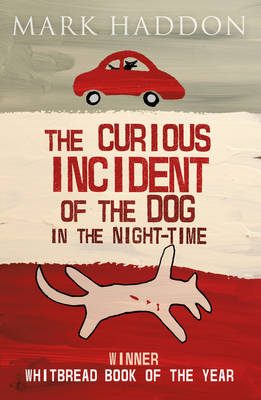
The first is the brilliant The Curious Incident of the Dog In The Night-Time by Mark Haddon. Published in 2003, and taking its title form a throw-away line in a Sherlock Holmes story (“The Adventure of Silver Blaze” – also worth reading), this is too is a detective story – but with a BIG difference.
The victim is a neighbour’s dog and the detective is a fifteen year old boy, called Christopher, who it is implied is on the autism spectrum. What makes this so captivating is that is it written in the first person so as he goes about trying to solve the case we get a massive insight into his way of thinking.
Christopher is a very likeable character and is a pleasure to be in the company of, however as he continues his investigation he discovers that there are bigger things happening in the world around him and as a result you end up really empathising with him as he has to adjust to a new reality.
The tone feels light and easy to digest, that is until when you actually stop and think about it and you realise you’ve been taking in some quite heavy stuff. This is a skill in writing that I am very envious of. It has been adapted into a play and, when theatres are open once more, if you get the chance I’d recommend seeing it as well. I’m not a great fan of watching adaptions of books I love but this one is so good I’d say it was essential, but only after you’ve finished the book.
And Father said, “Christopher, do you understand that I love you?” And I said “Yes,” because loving someone is helping them when they get into trouble, and looking after them, and telling them the truth, and Father looks after me when I get into trouble, like coming to the police station, and he looks after me by cooking meals for me, and he always tells me the truth, which means that he loves me. ― Mark Haddon, The Curious Incident of the Dog in the Night-Time
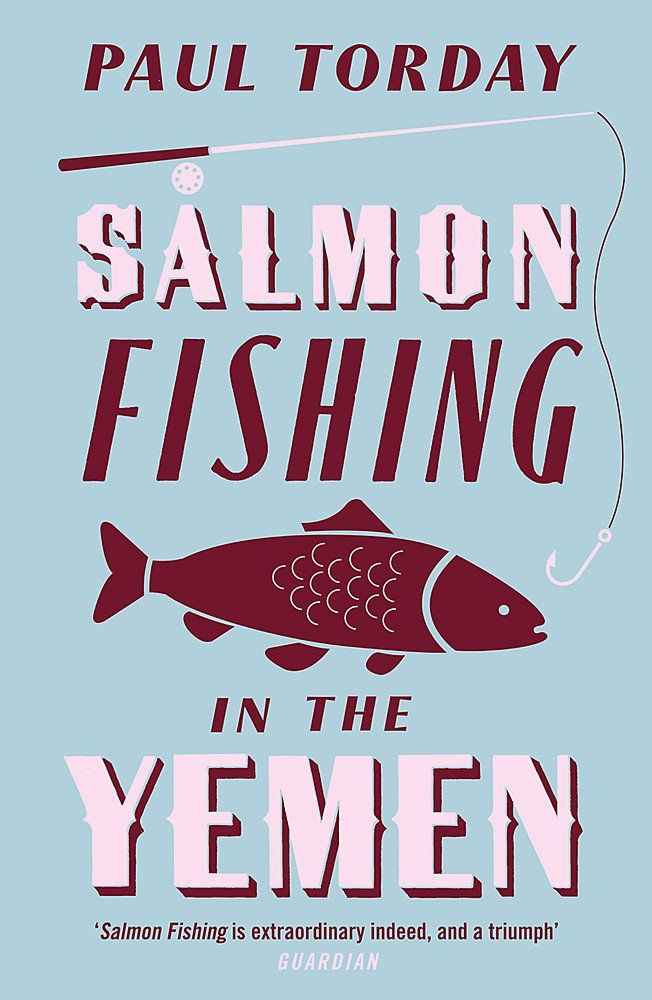
The other book is Salmon Fishing In The Yemen the debut novel by Paul Torday, this was adapted into a film but I’ve not seen it as I don’t think it could beat the book. When it was published in 2007 it seemed that everyone was reading it. I waited until a trip to Finland in 2014 (thinking about it only other book I’ve read by Paul Torday so far I read in Copenhagen so maybe next time I’m in a Nordic country I should pick up another).
Slightly unconventional it tells of a scheme to set up, exactly as the title tells you, salmon fishing in the Yemen. Told by way of emails, entries in Hansard (the transcripts of what goes on in the UK Parliament – I should write a blog about that one day it’s very interesting) and various other short texts this book manages to take in marriage issues, the middle east, faith, government intrigue and of course fishing, but such a range never feels overwhelming.
Again this book feels easy to read, even if there is more going on than at first you realise, making it ideal for a sunny spring afternoon.
“As I write this entry in my diary, I myself feel like a diary which has been left out in the rain, from which the moisture has washed away the cramped inky writing, the record of thousands of days and nights, leaving only a blank and sodden page.” ― Paul Torday, Salmon Fishing In The Yemen
Both this and The Curious Incident of the Dog In The Night-Time and deserve their place as literary zeitgeists, as it were, but they are also on their way to becoming permanent entries into quality literature.
Just a glance at Twitter and Facebook shows that a lot of people like animals. Videos, pictures, gifs about cats, dogs, goats and anything else prove that featuring fauna is always going to be popular. As we are all inside at the moment and as it’s spring, the time of lambs and small chicks, I personally feel we are missing out. It’s my favourite time of the year but this time round we can not be immersed in nature.
That being said there are plenty of books that can try and fill that void. Two of my favourite writers are known for their works about animals and they are great feel good reads, which is another positive thing for us all at the moment.
James Herriot’s works are probably better known from the 1980’s TV series All Creatures Great And Small, but they were merely an adaption of his books. I do have fond memories of watching them on a Sunday evening when I was young, there was always someone with their arm up a cow, for a child that is very funny.
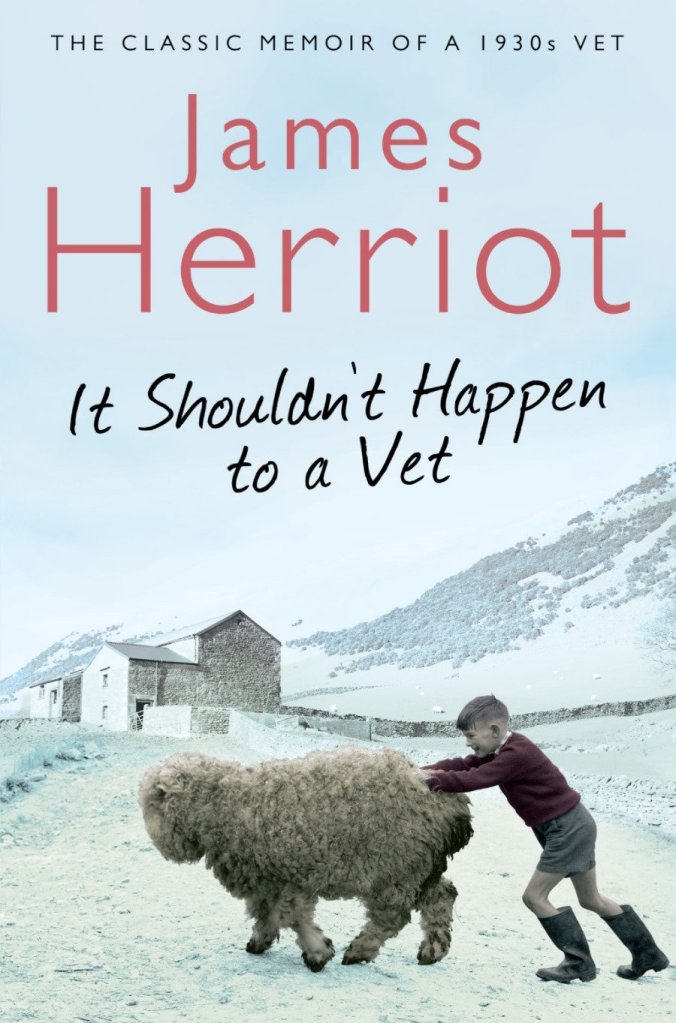
I discovered the books years later, It Shouldn’t Happen To A Vet was in a second hand book shop I used to frequent. I bought it and took it with me to the south of France one winter, I spent a freezing January day in Tende waiting for a train to take me to Italy, but it wasn’t going to arrive until well after 9pm; the only connection after I arrived there just before lunch. Being mid-winter there were only two cafes open so I made a nuisance of myself by staying far too long in each one just to keep warm, until they closed or I felt the stares of the staff finally get too heavy. I then had to wait outside on the platform. James Harriot’s book kept me well entertained as I was lost in a world far different from my own, but nearer to the one I found myself in. It didn’t make me any warmer though.
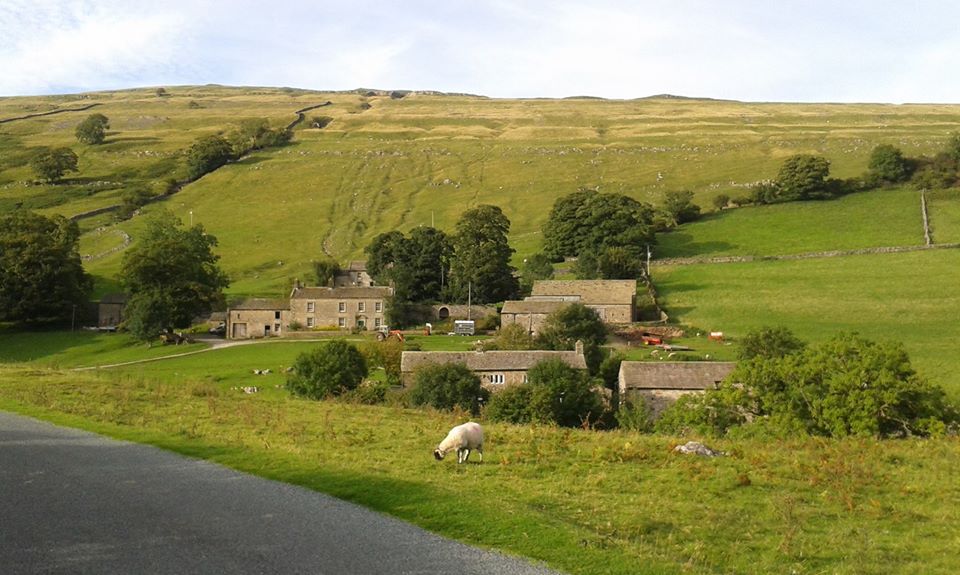
Set around the time of the Second World War, James Herriot has written eight books based on his time as a country vet in the magnificent Yorkshire Dales. Each book is a series of short episodes in his life revolving around the farms his practice looked after, smaller domestic animals the locals had, and life in general. Each story is a gem and many make you laugh out loud. These are based on his own experiences, although his real name was James Alfred Wright, and those of his colleagues.
The Yorkshire Dales
You can tell he has a real fondness for the characters he paints as he goes about his work, and not just the humans but the dogs, cats, sheep, cows, horses and everything else that came his way.
As stated this is set in the rural Yorkshire Dales around the 1930/40’s. Life was harder, simpler and people had a lot more skill and endurance. It does of course make you a little concerned as this was a time before drink driving was considered a bad thing and some stories tell of men getting very drunk in a pub and then driving home as if there was nothing to worry about, but as I said it was a very different world. If you like animals then you will love these books.
It was a bit late to stand on my dignity. I went over to the animal and seized her by the ear. Inflating my lungs to the utmost I bent down and bawled wildly into the hairy depths. The cow stopped chewing for a moment and looked at me enquiringly, then her eyes drooped and she returned contentedly to her cudding. ‘We’ll give her another day,’ I said wearily. ‘And if she’s still down tomorrow we’ll have a go at lifting her. Could you get a few of your neighbours to give us a hand?’ ― James Herriot, It Shouldn’t Happen To A Vet
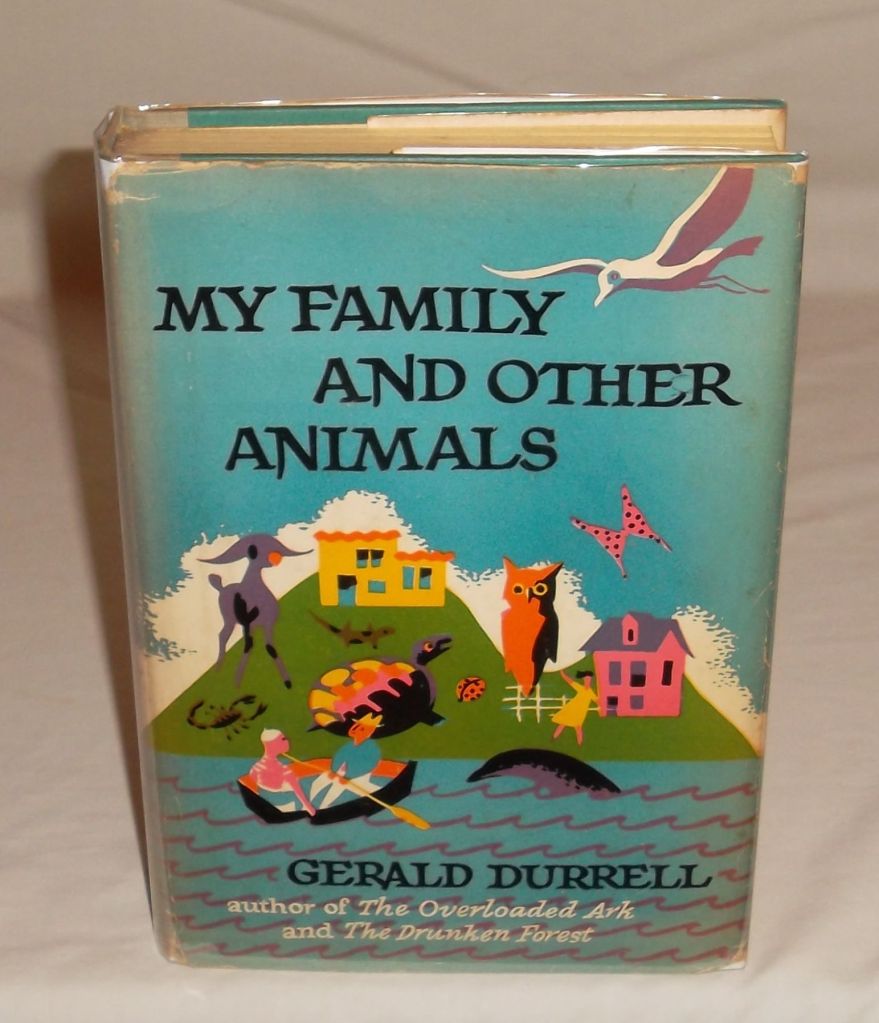
Also known for his love of animals is Gerald Durrell. Once again probably more connected to several TV adaptions, the latest of which was only very loosely based in his books, but there is far more to his work than Corfu Trilogy.
Of course My Family And Other Animals, the most famous and first in the trilogy, is a perfect starting point. Set just a few years before James Herriot’s experiences, Durrell’s books recount his very eccentric family’s move to, and life on, the Greek island of Corfu.
Just as the title says My Family And Other Animals is about his family but also his love for nature, which would prompt him in later life to set up ecological programs and a conservationist zoo.
The books are, once again, laugh out loud funny, as his family get into various scrapes and situations. He also describes the fauna and flora about him in such a way that makes the reader want to be there with him.
Gerald Durrell wrote many other books about his experiences with animals, often times abroad on expeditions to try and conserve endangered species. Often this is done is a way that is out dated by today’s standards but it was people like him that pushed for us to care about wildlife and that got us to a more advanced state today. Most works set post Corfu follows a similar path to each other, but when you just want to sit and read something enjoyable these certainly hit the spot.
“It’s all your fault, Mother,’ said Larry austerely; ‘you shouldn’t have brought us up to be so selfish.’ ‘I like that!’ exclaimed Mother. ‘I never did anything of the sort!’ ‘Well, we didn’t get as selfish as this without some guidance,’ said Larry.” ― Gerald Durrell, My Family and Other Animals
Both James Herriot and Gerald Durrell have left a wealth of literature that means when you’ve finished one of their books, it won’t be long until you are back in the gentle worlds with them and all the animals they cared about.
Growing up there were always two books joked about when anyone wanted to hyperbolise a long text; War And Peace and Crime And Punishment. I always liked the symmetry of the fact that for two books to have the same reputation they always had the same concepts in their titles; something and something, each side balancing the other.
Firstly forgive me on this as I had planned to do a blog on Russian Literature in general, there is far more to it than just these obvious two (it probably will be a two parter) so I will look at it in greater depth elsewhere. But as frustratingly not everything falls neatly into separate categories, I realised when I was thinking about long books to read I had to include these.
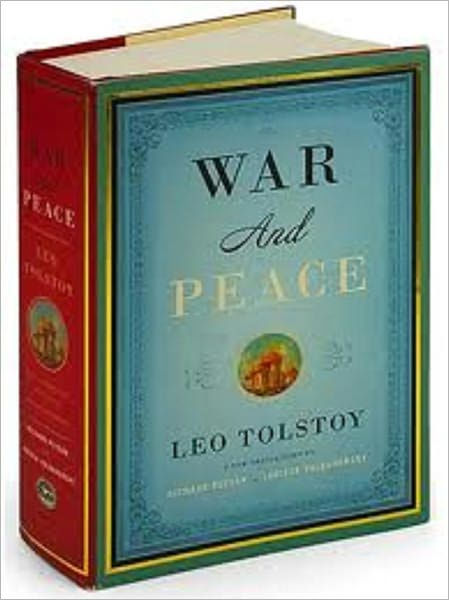
Let’s start with War And Peace by Leo Tolstoy. Like a lot of literature in those days, this was originally serialised and in this case it was in The Russian Herald. In fact some sources state it took between 1865 to either 1867 or 1869 to do the whole thing. It was, however published as a book in 1869.
Once again this is a massive tome, and having been written in a foreign language it’s hard to be specific in exactly how long it is, as translations and formats will differ in word and page count. Instead we can say it is broken up into four Books and an Epilogue (of two parts).
It literally is about War and Peace. Starting in 1805 amidst the Napoleonic Wars that were sweeping across Europe it follows the course of the lives of five intertwined families, in both Peace and War times. Epic is the very word for its scale.
Tolstoy himself said it wasn’t a novel. As you read this you see he had a far greater ambition than just telling a story. The book includes various essays and philosophising on the part of the author. Some say this slows the plot, some say it adds more weight to it. Either way taking on this tome is no mean feat. Don’t be put off by hearing that, but it’s probably good foreknowledge to have so you know what you are taking on.
I read it years ago when I was living in London and was taking the Underground to work every day. I had the time and made use of it. I’d seen it for sale in a shop reduced in price and I decided that the amount of hours entertainment I was buying made this a very good deal. Also I’d always heard people joking “it’s like reading War And Peace,” about other things and since I loved reading, why not actually do it? I’m very proud to say I finished it, as gloating rights are automatic, but it did open a door to the world of Russian Literature as having enjoyed it so much the natural next step was…
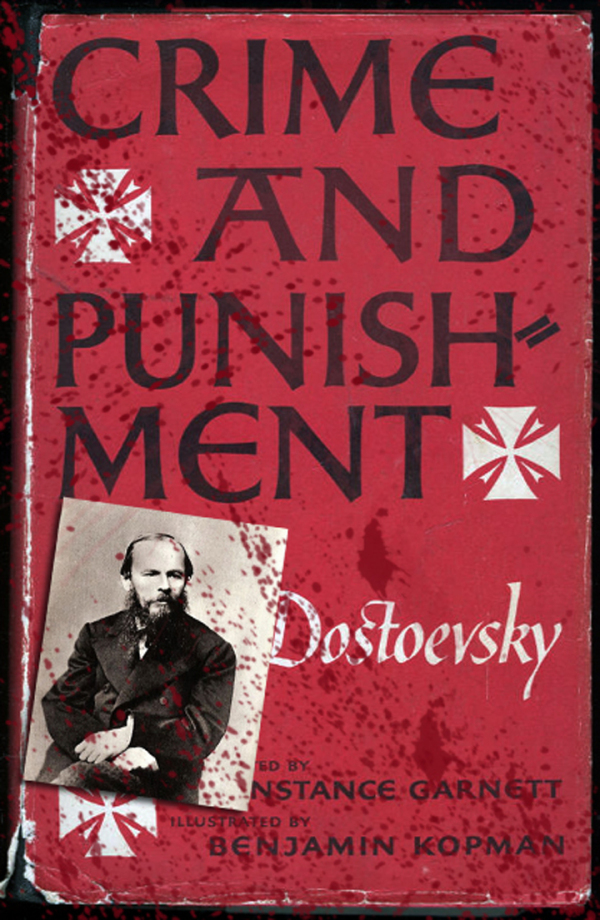
Crime And Punishment by Fyodor Dostoyevsky. Fyodor Dostoyevsky has since become one of my favourite authors so you will be getting more of his other works later. But Crime And Punishment was such a game changer for me when it came to reading. In theory it was War And Peace that made me take on these big classic works, and whilst I enjoyed that, I LOVED Crime And Punishment.
As it was first published, once again as a serial, in 1866 and then as a book in 1867, it was a contemporary of War And Peace. However this was set at the time of publication and reflects St Petersburg as it would have been known to the author.
It is no way as long as War And Peace but it is deep. The premise is that Raskolnikov, a former student, decides that it is morally acceptable for him to kill someone, and then the plot follows the consequences of that judgement. It’s not exactly light reading, however the way it takes you into the thoughts of this man is a fascinating insight into the workings of conscience and paranoia. How does this choice affect him? Does he act on it? I’m not going to tell you, but I’ll recommend you find out by reading it for yourself.
I read it a couple of years after War And Peace. I’d concluded that having read both of the obvious very long reads that would be enough; but it just gave me a taste for Russian Literature and I’ve read a lot of it since, and plan on discovering even more.
Both of these novels are well worth the challenge. If you want an ongoing saga of family life amidst the historic wars of Europe read War And Peace. If you want a psychological thriller read Crime And Punishment. If you liked one, read the other.
If you ask Google how long the average novel is, you get so many different lengths and ideas you could make a book out of them. There does seem to be agreement that generally they are somewhere between 80,000-100,000 words. How that transfers to page count is hard as it depends of size of text, number of chapters and format. But again a cursory search on Google seems to indicate somewhere between 200 – 300 is about average for a novel. None of this is law. It also depends on the type of story and who the audience will be, basically do what seems right for the tale you want to tell.
Having said that there are some whoppers out there. I mean books that you look at on the shelf and think “If I start to invest in this it had better be good,” or “That’s going to take a lot of time,” no matter what our reading speed. Both of these statements are true along with, “If I finish that it’ll look great on the shelf and I can feel a bit smug”.
For a writer to produce something of vast length they need to be incredibly confident, as with all books really but here even more so. To ask your readers to stick with you for that long is a big ask; sometimes it pays off, sometimes it really doesn’t.
All things being equal, it does always come down to opinion. Something I really love might not appeal to others and vice versa. Having said that, seeing as we all seem to have a bit more time on our hands as more and more restrictions are imposed worldwide due to the coronavirus, So, in this Part and in the next one, I’ve suggested some really long reads which I have enjoyed and that you might want to have a go at. Am I doing this to be helpful or just to show off I’ve read them?… Yes, you’re probably right.
Both my authors I’m going to list for recommendations are in the “classic” genre. They’ve been around for years and I really think they are worth reading. Let’s start with the brilliant Victor Hugo.
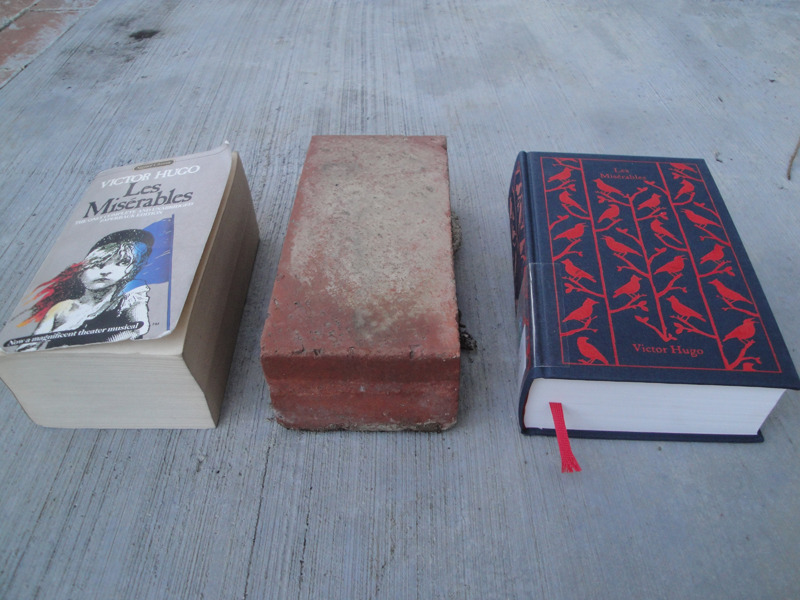
It’s hard to say how many pages long Les Misérables is, it depends on the edition and the language. The Penguin Classics in English is 1,232 pages. (You can get an abridged version, but what’s the point?) The book is set out as explained by its Wikipedia page:
“The novel is divided into five volumes, each volume divided into several books, and subdivided into chapters, for a total of 48 books and 365 chapters.”
Regardless of the language and the edition and format, it’s a long read! I have a version spilt into two volumes and that made the thing easier to hold if anything, and not so intimidating to start.
Someone demonstrating how it can be likened to a brick
Frankly I love it. I really enjoyed every page. I’d not seen the musical or any adaption, so it was all new to me and I think that is the best way of attempting this (if you have seen them it’s still recommended). I really had no idea what the story was before I picked it up so Jean Valjean’s uncertain future became mine.
Let’s make one thing clear – to be that length the writing is intricate, but you soon get used to it. At the start there is a very lengthy account of the life of Bishop Myriel. For those of you who know the story he’s actually an almost incidental character and this is the first stumbling block for many who just want to get to the action. It takes up a lot of pages and meticulously catalogues his life and ways. I can see why this would be irritating; but for me I didn’t know this so just went with it and enjoyed it as a result. Later there are other very long histories and accounts that aren’t really necessary to the plot (the history of an old convent somewhere towards the middle for example), but by this point the reader is aware what is happening and if they’ve stuck with it this long they’re obviously enjoying it.
The book does build momentum and I genuinely didn’t know what would happen as it (despite length and side-tracks) eventually speeds on towards the conclusion. I was gripped. I really love this book and I still haven’t, and now won’t, see an adaption as I think it misses the point. Les Misérables is a book that you need to commit to reading to get the full enjoyment.
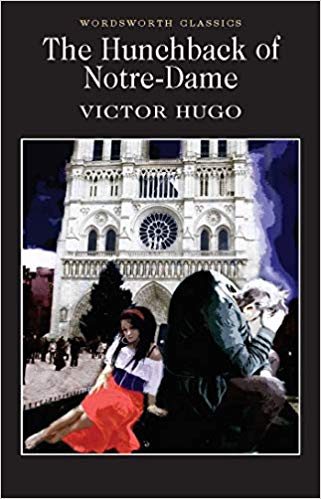
Just as an addition although shorter, sometime after I finished Les Misérables I read The Hunchback of Notre-Dame. Again I’d not seen any adaption of it but went into it blind. Once more I fell in love with it. The attention to detail is still there but not as intricate or overwhelming, however it gives fascinating histories of various parts of Paris as well and other interesting information as the plot goes on. Just like Les Misérables it manages to keep momentum and again I was engrossed by the time I got towards the end. I stayed up until 4am to finish it, I just needed to know what happened.
If you’ve seen an adaption, especially Disney’s, expect something totally different. Darker in tone and grim in plot, this still is a read will worth undertaking.
As I state elsewhere I’m not Irish. However I have lived for many of my important years in Dublin. To me it’s the default city. I’ve lived in other places but the experiences I have had in the Irish capital are really what made me me. Therefore when I came to write my novel Framed In Rathgar, it wasn’t so much a choice to set the book there, I just did because that is the place I knew the best.
Dublin of course is steeped in literary heroes, enough in itself a reason to be inspired. To name a few you have James Joyce, Bram Stoker, George Bernard Shaw, Jonathan Swift, Oscar Wilde, and W.B. Yeats; all with ties to the city. But these are the obvious ones. Just after I first moved to Ireland I found myself in a bookshop and decided it would be inexcusable not to buy some Irish books. Among the ones I chose was The Informer by Liam O’Flaherty (published in 1925). Set in the 1920s. it tells the story of a man who informs on his friend and spends the rest of the novel in fear of the repercussions. Set in a grimy, poor Dublin where men book themselves in to hostels for a place to stay the night only if they can afford it and roam the streets the rest of the time looking for any money they can spend, this was a very different view of the city I had, having come in the closing years of the Celtic Tiger.
The fascinating thing is with its Georgian buildings still intact this fictional world is still there, almost as if I had been reading a document from the city’s history. Just walking through Merrion Square and the surrounding streets, or on the Northside Mountjoy Sqaure, are enough to take in the grand buildings and let your imagination run wild. The fact is I’ve just taken two places I frequented, there is so much more, the city is full with this identity… and doors that tourists love to photograph.
The real Rathgar.
For others Dublin is a fast moving city of opportunity and learning, Trinity College, Grafton Street and Guinnesses, modern reasons to visit, but stretching back through the years in its urban soul. There are so many hooks to put a story on here, and so much of its own local myth you will never finish with the possibilities of creating a fiction in these streets.
Dublin is in some ways very different from the rest of the country’s open country vibe. But it’s still small enough to represent the attitudes of the rest of the nation. Dubliners are still Irish and keep the culture alive and strong (sometimes more so than the rest of land if you’ve been in Gogarty’s pub in Temple Bar – actually well worth a night if you’re a tourist for Irish songs and music, but expensive).
Brighton Square in the snow.
I, and a number of my friends, lived in or around Rathgar, what estate agents would describe as a “leafy suburb”. I never lived on the main Rathgar Road, but I did for a while have a place on Leinster Road (it’s almost compulsory to live for even a short time on either of the two streets if you are going to have a studio in the Dublin 6 postcode). Rathgar is a really good place to live, as the three protagonists keep saying. You can walk to the Liffey (the very centre of Dublin) in about twenty minutes; but full of cafes and bookshops, pubs and parks (along with Rathmines) makes itself a good location in its own right. There is the full sweep of human life in these roads; from the millionaires in the refurbished and stunning homes, to the students and others squashed in the houses that have been converted to small studios. There are many stories here told to large audiences, some talked about between friends, others still waiting to find their voice. I just wanted to add my tiny piece to the flow.






 Arthur Hofn - Literature