
Putting The Misery Into Tragedy
As my last blog was a bizarre shout at the planet to both slow down and get better I thought I would need to make the next one more upbeat… So I’m going to tell you about two of the most depressing books I’ve read. Be warned there are SPOILERS coming, I’ll try and keep them at a minimum but when blogging about a book’s tone you may need to refer to the end… just saying. If you want to know no more turn back now… otherwise “Abandon hope all ye who enter here.”
To be honest I’m not a misery and of course it’s not true that drama is tragedy; but try telling a compelling story where bad things don’t happen. It is so much harder to write anything with soul and heart that is upbeat. I don’t mean it’s impossible, I’m sure I’ll blog about my favourite upbeat books later (there is no real plan to what I do here), but it’s just harder. I guess this is why most people at the start of their writing experience, when charged with writing a story, go for tragedy over comedy.

Again I’m not saying that I think any less of the two books which follow, in fact they are both top quality writing, that’s not just my opinion, both writers have highly prodigious awards to prove it. My point is, although tragedy and depressive things aren’t necessary for a good story, we are kind of drawn to them and done well they will effect your soul.
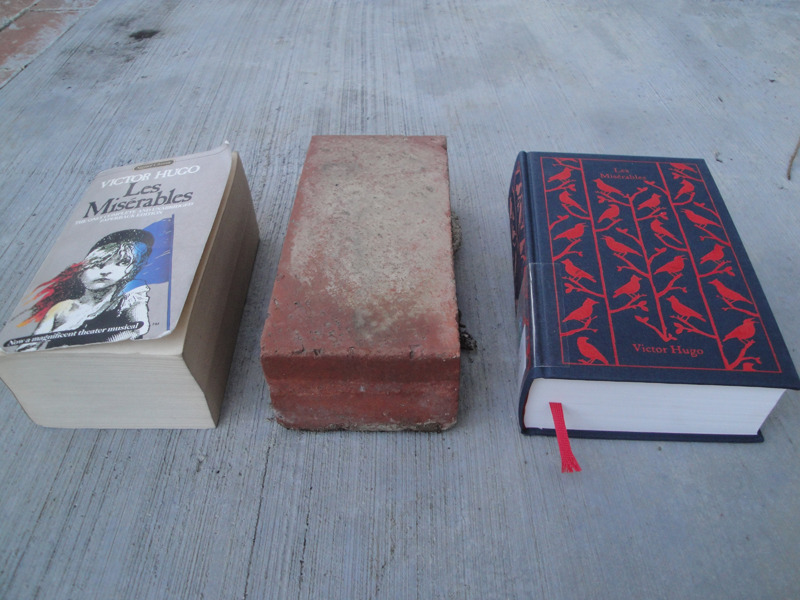
I’ve waxed lyrical about my love for Les Misérables elsewhere (the book; I’ve not, and refuse to, access any other format of the story at this point), and my goodness it deserves the title. That nice lady with nice hair and teeth! But even then I wasn’t rendered stunned reading that as I was by the time I’d got to end of The Grapes Of Wrath.

Taking it’s name from the book of Revelation, John Steinbeck’s novel about a family trying to survive in the American Depression is what made me love this author. It was the second of his books I’d read and I am now on a mission to read them all, but sparingly. I really can’t say too much as the concept of what happens as we follow the Joads is the whole point of the plot and you really need to discover that as you read it. The Joads are a family who move from their farm in Oklahoma, which is no longer viable for them to survive, to California as they believe a better life awaits them. The book follows their journey, incorporating others who are doing the same. It’s not just them, these events happen to most of the characters. The fact is it’s not just a story. Whilst the events are fiction real people, real human beings like you and me, were making this journey as the book was being written in the 1930s and very similar challenges to the ones the Joads were facing were the life experiences of many many people who were around at the time of publication. When you know that it takes on a far more bitter taste.
So why read it? Why put yourself through the harrowing events? I could state it’s about greed and and how it’s a scream at the injustice happening back then which is still happening today, but we all know about that at this point, we’re not going to learn anything new. Instead the book is a master class in how to write tragedy to a very high standard, to invoke pathos without going too far. It’s human, it’s real, it’s gritty without needing any of those terms in the way that films bandy them about to make them look like they have depth. I said writing tragedy is easier, but to do it on this level is a gold standard I’ll try and aim for, but will fail at each time..
“I seen fellas like you before. You ain’t askin’ nothin’; you’re jus’ singin’ a kinda song. ‘What we comin’ to?’ You don’ wanta know. Country’s movin’ aroun’, goin’ places. They’s folks dyin’ all aroun’. Maybe you’ll die pretty soon, but you won’t know nothin’. I seen too many fellas like you. You don’t want to know nothin’. Just sing yourself to sleep with a song—‘What we comin’ to?”
― John Steinbeck, The Grapes of Wrath
The other reason you should read it is because it’s a great book. Ok when I finished it, pushing on through the last pages to see how it ends, desperate to know, I did actually go into a decline for a few days after. The images at the end, the implications, the meaning of it all ghosted me for a good while after. I couldn’t get them out of my head which no other book has done. I still say this is one of the best books I’ve read just because of what it did to me.

The other book I want to recommend is A Fine Balance by Rohinton Mistry. Set in India in the 1970s and 1980s this is the story of a small group of people who, through events, form a community just to be able to continue to exist. Everything is against these people. They each have a story of their own and they are constantly fighting their own worst outcomes. Then they find each other. It doesn’t matter how the book ends, I don’t need to refer to anything in the second half of the book, to say it’s grim. This could very well pick up and work out well, it could not or it could be somewhere in the middle, discover that yourself, but as you reflect on what pushed the characters to get into the plot, to become part of the community in the first place, even that is enough to make anyone lose hope in any kind of reliability of the stability of their own life. Then you have the stories of the fringe characters… I will say no more, read the book, then we’ll talk.
I read this novel on a short break to the paradise of Placencia in Belize. Whilst I was sat on the beach looking out at the glorious Caribbean Sea I was slowly sinking into despondency… yeah I should have chosen another book to take with me. As the bars were alive with music and fun I was sat weeping into my cocktails and hot wings… well not quite.
“But nobody ever forgot anything, not really, though sometimes they pretended, when it suited them. Memories were permanent. Sorrowful ones remained sad even with the passing of time, yet happy ones could never be recreated – not with the same joy. Remembering bred its own peculiar sorrow. It seemed so unfair: that time should render both sadness and happiness into a source of pain.”
― Rohinton Mistry, A Fine Balance
I did really enjoy reading the book though. When I say that it feels like I’m taking pleasure in other’s misfortune, even if they are fictional. Don’t judge me you’ve done the same. I guess being inside the mind of people who aren’t real but are feeling things we’ve felt and thinking things we’ve thought somehow helps us process we’re normal? Or at least that there is someone out there who understands.
Tragedy done well can do more than change a reader’s emotions, it can make them think without preaching, this is a skill I wish I had. Upbeat books are harder to write than misery… but writing quality misery is a skill that should be prized because life is neither totally comedy nor tragedy and it won’t ring true unless it’s done well.
Buy The Grapes Of Wrath by John Steinbeck
Buy A Fine Balance by Rohinton Mistry
Follow My Blog
Get new content delivered directly to your inbox.

 Arthur Hofn - Literature