Very Long Reads – Part Two: The Obvious Russian Ones

Something to do as we have more time.

Growing up there were always two books joked about when anyone wanted to hyperbolise a long text; War And Peace and Crime And Punishment. I always liked the symmetry of the fact that for two books to have the same reputation they always had the same concepts in their titles; something and something, each side balancing the other.

Firstly forgive me on this as I had planned to do a blog on Russian Literature in general, there is far more to it than just these obvious two (it probably will be a two parter) so I will look at it in greater depth elsewhere. But as frustratingly not everything falls neatly into separate categories, I realised when I was thinking about long books to read I had to include these.

Let’s start with War And Peace by Leo Tolstoy. Like a lot of literature in those days, this was originally serialised and in this case it was in The Russian Herald. In fact some sources state it took between 1865 to either 1867 or 1869 to do the whole thing. It was, however published as a book in 1869.
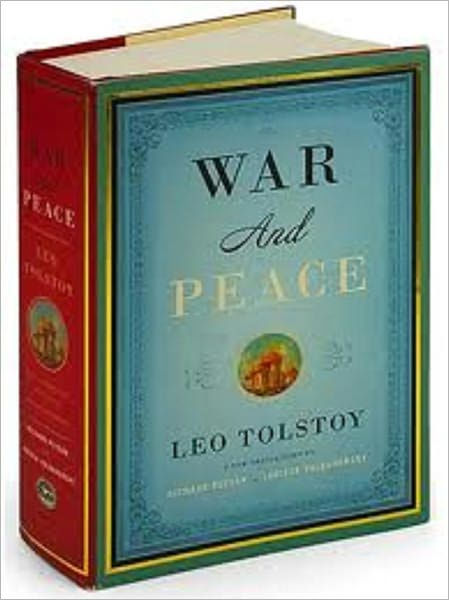
Once again this is a massive tome, and having been written in a foreign language it’s hard to be specific in exactly how long it is, as translations and formats will differ in word and page count. Instead we can say it is broken up into four Books and an Epilogue (of two parts).

It literally is about War and Peace. Starting in 1805 amidst the Napoleonic Wars that were sweeping across Europe it follows the course of the lives of five intertwined families, in both Peace and War times. Epic is the very word for its scale.

Tolstoy himself said it wasn’t a novel. As you read this you see he had a far greater ambition than just telling a story. The book includes various essays and philosophising on the part of the author. Some say this slows the plot, some say it adds more weight to it. Either way taking on this tome is no mean feat. Don’t be put off by hearing that, but it’s probably good foreknowledge to have so you know what you are taking on.

I read it years ago when I was living in London and was taking the Underground to work every day. I had the time and made use of it. I’d seen it for sale in a shop reduced in price and I decided that the amount of hours entertainment I was buying made this a very good deal. Also I’d always heard people joking “it’s like reading War And Peace,” about other things and since I loved reading, why not actually do it? I’m very proud to say I finished it, as gloating rights are automatic, but it did open a door to the world of Russian Literature as having enjoyed it so much the natural next step was…

Crime And Punishment by Fyodor Dostoyevsky. Fyodor Dostoyevsky has since become one of my favourite authors so you will be getting more of his other works later. But Crime And Punishment was such a game changer for me when it came to reading. In theory it was War And Peace that made me take on these big classic works, and whilst I enjoyed that, I LOVED Crime And Punishment.
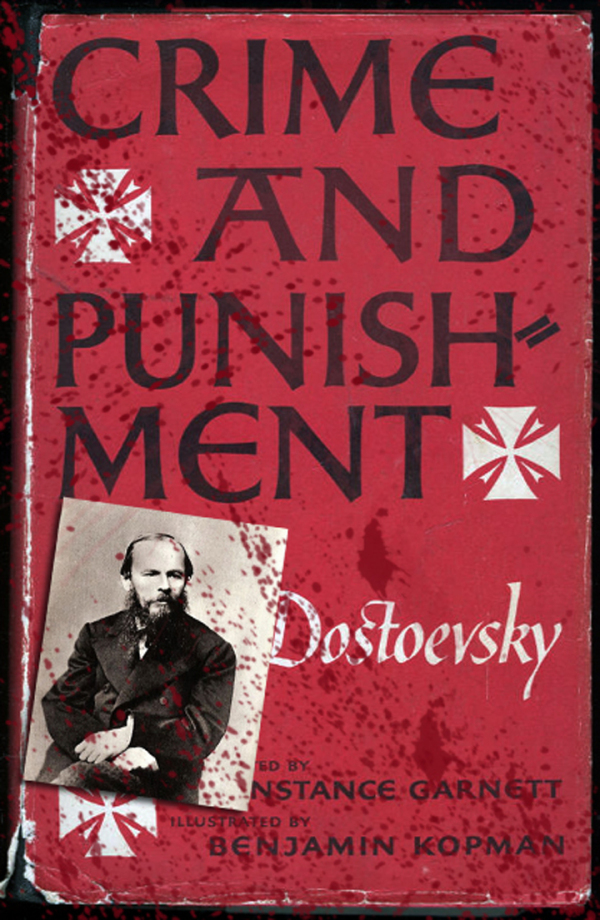
As it was first published, once again as a serial, in 1866 and then as a book in 1867, it was a contemporary of War And Peace. However this was set at the time of publication and reflects St Petersburg as it would have been known to the author.

It is no way as long as War And Peace but it is deep. The premise is that Raskolnikov, a former student, decides that it is morally acceptable for him to kill someone, and then the plot follows the consequences of that judgement. It’s not exactly light reading, however the way it takes you into the thoughts of this man is a fascinating insight into the workings of conscience and paranoia. How does this choice affect him? Does he act on it? I’m not going to tell you, but I’ll recommend you find out by reading it for yourself.

I read it a couple of years after War And Peace. I’d concluded that having read both of the obvious very long reads that would be enough; but it just gave me a taste for Russian Literature and I’ve read a lot of it since, and plan on discovering even more.

Both of these novels are well worth the challenge. If you want an ongoing saga of family life amidst the historic wars of Europe read War And Peace. If you want a psychological thriller read Crime And Punishment. If you liked one, read the other.

Buy War And Peace By Leo Tolstoy
Buy Crime And Punishment by Fyodor Dostoyevsky

Follow My Blog

Get new content delivered directly to your inbox.
Very Long Reads – Part One: Victor Hugo

Something to do as we have more time.

If you ask Google how long the average novel is, you get so many different lengths and ideas you could make a book out of them. There does seem to be agreement that generally they are somewhere between 80,000-100,000 words. How that transfers to page count is hard as it depends of size of text, number of chapters and format. But again a cursory search on Google seems to indicate somewhere between 200 – 300 is about average for a novel. None of this is law. It also depends on the type of story and who the audience will be, basically do what seems right for the tale you want to tell.

Having said that there are some whoppers out there. I mean books that you look at on the shelf and think “If I start to invest in this it had better be good,” or “That’s going to take a lot of time,” no matter what our reading speed. Both of these statements are true along with, “If I finish that it’ll look great on the shelf and I can feel a bit smug”.

For a writer to produce something of vast length they need to be incredibly confident, as with all books really but here even more so. To ask your readers to stick with you for that long is a big ask; sometimes it pays off, sometimes it really doesn’t.

All things being equal, it does always come down to opinion. Something I really love might not appeal to others and vice versa. Having said that, seeing as we all seem to have a bit more time on our hands as more and more restrictions are imposed worldwide due to the coronavirus, So, in this Part and in the next one, I’ve suggested some really long reads which I have enjoyed and that you might want to have a go at. Am I doing this to be helpful or just to show off I’ve read them?… Yes, you’re probably right.

Both my authors I’m going to list for recommendations are in the “classic” genre. They’ve been around for years and I really think they are worth reading. Let’s start with the brilliant Victor Hugo.

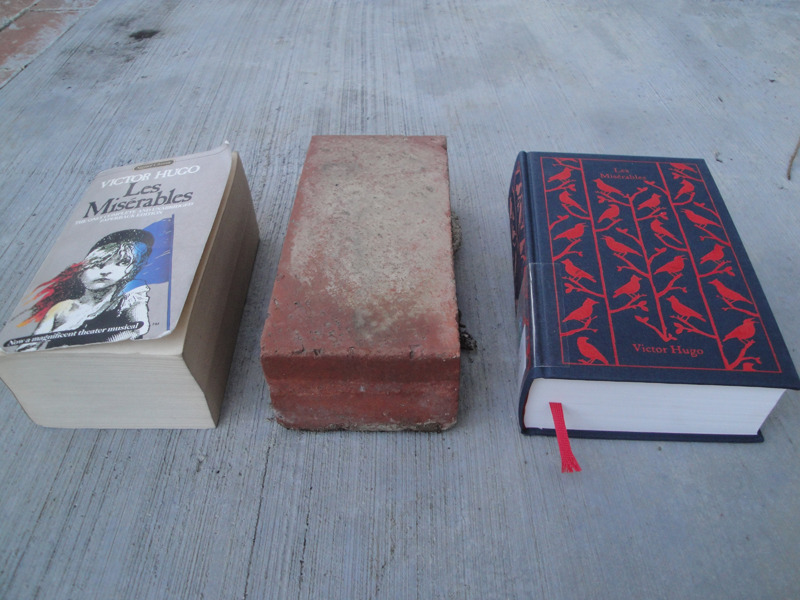
It’s hard to say how many pages long Les Misérables is, it depends on the edition and the language. The Penguin Classics in English is 1,232 pages. (You can get an abridged version, but what’s the point?) The book is set out as explained by its Wikipedia page:

“The novel is divided into five volumes, each volume divided into several books, and subdivided into chapters, for a total of 48 books and 365 chapters.”

Regardless of the language and the edition and format, it’s a long read! I have a version spilt into two volumes and that made the thing easier to hold if anything, and not so intimidating to start.

Someone demonstrating how it can be likened to a brick

Frankly I love it. I really enjoyed every page. I’d not seen the musical or any adaption, so it was all new to me and I think that is the best way of attempting this (if you have seen them it’s still recommended). I really had no idea what the story was before I picked it up so Jean Valjean’s uncertain future became mine.

Let’s make one thing clear – to be that length the writing is intricate, but you soon get used to it. At the start there is a very lengthy account of the life of Bishop Myriel. For those of you who know the story he’s actually an almost incidental character and this is the first stumbling block for many who just want to get to the action. It takes up a lot of pages and meticulously catalogues his life and ways. I can see why this would be irritating; but for me I didn’t know this so just went with it and enjoyed it as a result.  Later there are other very long histories and accounts that aren’t really necessary to the plot (the history of an old convent somewhere towards the middle for example), but by this point the reader is aware what is happening and if they’ve stuck with it this long they’re obviously enjoying it.

The book does build momentum and I genuinely didn’t know what would happen as it (despite length and side-tracks) eventually speeds on towards the conclusion. I was gripped. I really love this book and I still haven’t, and now won’t, see an adaption as I think it misses the point. Les Misérables is a book that you need to commit to reading to get the full enjoyment.

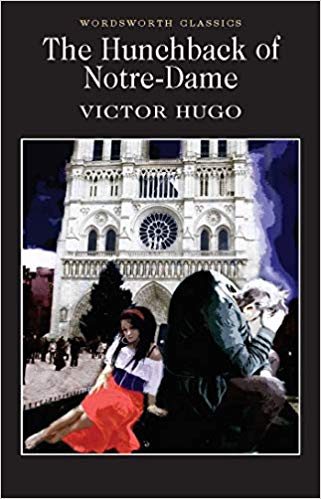
Just as an addition although shorter, sometime after I finished Les Misérables I read The Hunchback of Notre-Dame. Again I’d not seen any adaption of it but went into it blind. Once more I fell in love with it. The attention to detail is still there but not as intricate or overwhelming, however it gives fascinating histories of various parts of Paris as well and other interesting information as the plot goes on. Just like Les Misérables it manages to keep momentum and again I was engrossed by the time I got towards the end. I stayed up until 4am to finish it, I just needed to know what happened.

If you’ve seen an adaption, especially Disney’s, expect something totally different. Darker in tone and grim in plot, this still is a read will worth undertaking.

Buy Les Misérables by Victor Hugo
Buy The Hunchback of Notre-Dame by Victor Hugo

Follow My Blog

Get new content delivered directly to your inbox.