Suspending the Disbelief

How Far Can We Go?

Fiction is, by its very nature, made up. That means writers of stories have to convince their reader that whilst in their world what they are reading can have believably happened. This might seem easy, in theory, when dealing with the domestic; if the novel is about a couple who fall in love then (don’t call me a cynic) as this happens all the time, possibly it’s happened for the reader, then it’s conceivable some made up people have done the same thing.
However for authors of science-fiction it can take on an extra challenge. From whole worlds having to be created into which the reader has to submerse themselves, to twisting our everyday experiences into something most of us would find unbelievable. Yet not only does the reader have to accept this, so do the characters who need to be rounded and accessible and have a good reason why they would give countenance to something we would judge them for if we knew that person in normal circumstances; of course in the novel they would be right to do so and we would most probably be eaten by Chapter Five.

Even though the fictional world and those that populate it are made up, there are still rules that have to be abided by. For an author to break those rules, even if they created them themselves, they need a good reason and a method which does not cause the reader to step out of that world. This has to be played very carefully when adding twists to the plot. Twists have to not be seen coming, but in hindsight make perfect sense, a hard trick to pull off; at best the new direction of the story should be built in first and the previous deceptions in the plot thought up later.

Earlier I said that in theory stories that deal with everyday situations are easier to convince the reader to accept, but this is only in theory. Compare two examples:
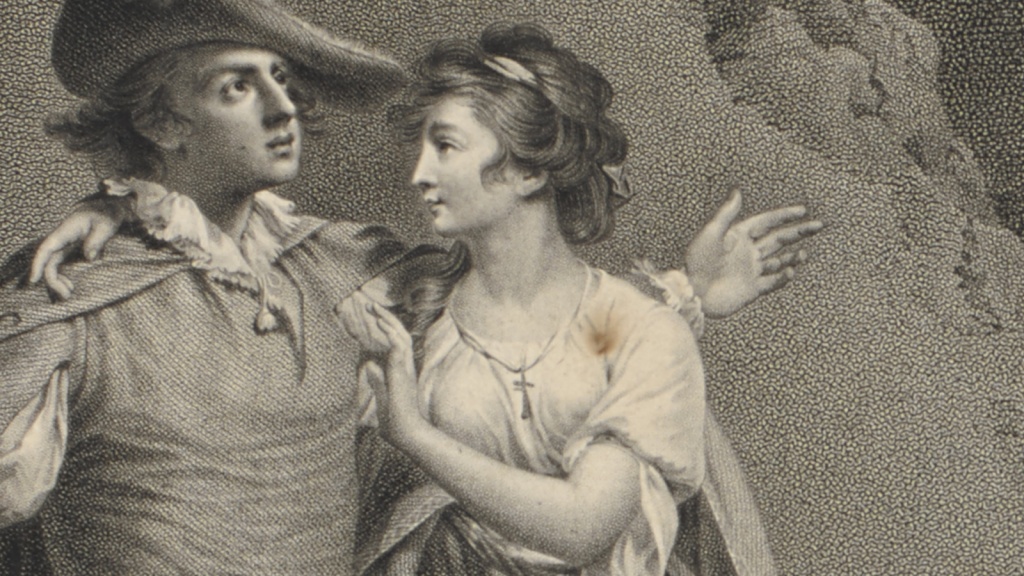
In many of Shakespeare’s plays characters meet each other briefly and fall instantly in love, hopelessly devoted to each other they are then prepared to go to extreme lengths to get or stay together. Whilst “the possibility of love at first sight” is another blog in itself and totally outside of the scope of this website, on the whole Shakespeare manages to get his audience to go with it. It propels the plot forwards and the actors often do a lot of work to convince us this is so. I wonder if Shakespeare’s name can carry the weight for us to allow him to get away with things we’d be harsher on with other writers? He certainly proved he knew what he was doing.

“The very instant I saw you, did
My heart fly to your service; there resides
To make me slave to it.”
― William Shakespeare, The Tempest

Compare that, and I’m sorry to lower the tone of this a little, with a plot point from a famous worldwide TV programme, in which after many years of being on air two characters who were just, let’s say, Friends, decided to become a couple. It didn’t work out in the programme and one of them went on to fall in love with the person she was created to be in a couple with (it ended years ago, get over the spoiler). But at the time few believed this new relationship, still to this day it’s become a joke of bad plotting.

NOTE: I just want to point out I fully know that my example is not in keeping with higher literary standards I set for this blog, neither am I much of a fan of said TV programme, but it was the best example I could think of. Please don’t judge me, laughing emoji (oh dear I’ve even introduced emojis now).
Back in the world of science-fiction lots of really strange ideas have to be sold carefully because they are so different from the reality. Often we like this because we want to step away from the ongoing normality that is this world, that makes sense, but it’s not an excuse for the writer to be lazy or push things too far.

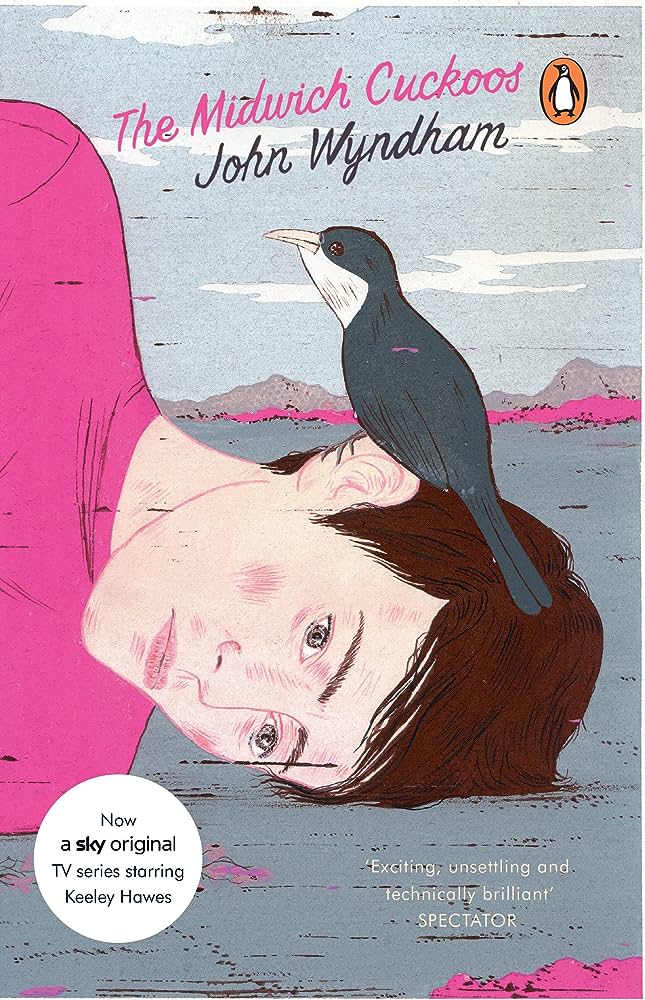
How about a story where a large number of women unknowingly fall pregnant by xenogenesis and give birth to aliens who begin to have mind control over everyone? It’s a bit of a far fetched idea, but The Midwich Cuckoos by John Wyndham is a deservedly classic and well loved novel. The reason for this is the way Wyndham tells the story, not just because he uses the first person but his characters act and react as if they really were in a small terribly English village of the 1950s. With so much that we know and trust already there, when use of subtle but clear explanations by Wyndham describe the strange we are just as willing to go with it.

“Mrs Brant had gone into Mrs Welt’s shop one morning to find her engaged in jabbing a pin into herself again and again, and weeping as she did it. This had not seemed good to Mrs Brant, so she had dragged her off to see Willers. He gave Mrs Welt some kind of sedative, and when she felt better she had explained that in changing the baby’s napkin she had pricked him with a pin. Whereupon, by her account, the baby had just looked steadily at her with its golden eyes, and made her start jabbing the pin into herself.”
― John Wyndham, The Midwich Cuckoos
You might argue that because it’s science-fiction we are more open to unusual ideas, but does that mean we can just accept anything? I’m a big Doctor Who fan and over the years that programme has sold us the most absurd concepts, but is there a limit? In one episode first shown in 2014 we were asked to believe that the moon turned out to be an egg of a giant space creature. The episode was set in the future and at the end it hatched and immediately the new creature laid a new moon for us (I don’t care about spoilers here, the episode is terrible and again it’s been 10 years, almost). Elsewhere other creatures were said to be single celled organisms that couldn’t possibly be. At the time there was much derision over this with the makers trying to play the whole thing down claiming because it was science-fiction it didn’t have to be scientifically accurate. Whilst this is technically true, it still needs to have some credibility.

I whole heartedly agree this was an idea that should never have got passed the first writer’s meeting, but why do we find it so ridiculous? Especially compared to other things we maybe thought were clever? In 2005 it turned out the London Eye was a large alien transmitter, but we bought that one. So why is the moon as an egg too far? Like most things in writing I guess it’s a case by case issue. The context needs to be taken into consideration, can you do more silly things in a one off novel than in an ongoing series? It doesn’t seem a good enough explanation. Maybe some ideas just can’t be sold, no matter how hard you try. There’s a good lesson there.

Buy The Midwich Cuckoos – by John Wyndham

Follow My Blog

Get new content delivered directly to your inbox.

The Deep Ways Of Thinking

I am no poet, I am no philosopher, I’m just trying to help you out.”

A little late but the 2020 Nobel Prize for literature has been awarded… and I’d never heard of her… sorry. Having done a bit of research, however, I decided that I approved of the selection (don’t have a go at me about that being pompous, we all decide if we agree with it or not each year – I’ve simply admitted I do).

Louise Glück is a poet from New York and one of the first things I discovered about her was that paper copies of her works can be quite expensive! I’ve read a bit online and I can appreciate what I’ve read of her work and overall the decision seems to have gone down well.

However here is another admission that I’m sure will reveal me for the fraud I am… I struggle with poetry. That’s not to say I don’t appreciate it, I understand it’s a very skilled and precise art-form, that a few lines can be a depth of emotion, knowledge and philosophy concentrated into a neat potion. My problem is I don’t always have the patience for it. A poem of just a few lines can be revisited again and again, considered and unlocked… this is my problem I haven’t yet trained myself to do this.

Places and geography are very important to me, I love travel, I mean I really love travel, my feet itch; what is over that horizon? Where does this road lead? Give me a map or an atlas and I can be lost for hours. I’m moving, I’m advancing. I love the journey, but the whole point is the destination, my goal. Then when I’ve achieved that I see the hill on the horizon and need to know what it the other side of that. Yes I can explore a new city, town or place for days or longer but I need to be moving to different location within that destination and soon I have the desire to be on the move again. To ask me to stay in one exact spot and study a river, street or a building for days, no matter how incredible they are, I feel like I’m missing out. I need to be moving again.

With books I can immerse myself and do all my thinking as the writer carries me along, it’s a long journey and I can look out the window and see the landscape as we go, I feel I’m getting somewhere. Poetry is the opposite, it’s looking at a line of words and digesting the meaning, the intent, my opinion of it, and then to go back again… as I say it’s a skill I have not learnt and I am somewhat envious of those that have it.

That’s not to say I don’t like any poetry, Dylan Thomas’ Do Not Go Gentle Into That Good Night is one I can go back to again and again, so to Dulce Et Decorum Est by Wilfred Owen (a school assignment forced me to for that one, but I benefited) and I have explored more of these and other poet’s works.

Good men, the last wave by, crying how bright
Their frail deeds might have danced in a green bay,
Rage, rage against the dying of the light.

― Dylan Thomas, Do Not Go Gentle Into That Good Night (extract)

In the last two blogs I spoke about my love of Shakespeare and he wrote a lot of poetry. I have his complete works and try to read them but I can only deal with a couple of his sonnets at a time; I still haven’t managed Venus and Adonis or the other long ones – which is odd because I can read a whole play.

Song lyrics mean a lot to me, but take away the music and I have a mental block.

Last year a pamphlet entitled Island Of Towers was published by the poet Clarissa Aykroyd. This appealed to me because many of poems are about places, and as I’ve said places are important to me. Some are set in and around London, we see the poet’s experience of the city and moments in time as well as its heritage (some Sherlock Holmes love surfaces in Sign). Other cities and worlds are opened up, other places to explore, to sink your teeth into, some I have been to, some new: Berlin, Cairo and Lisbon to name a few. With the subsequent restrictions and lockdowns, this is a way to travel, to discover a soul in these new worlds.

Under the hills swollen blue with water
I remember my coming and its why.
There was a plainness in the sky a light
to clear the mind of all that’s left behind.
― Clarissa Aykroyd, Wicklow Mountains After Rain (extract)

My favourite poem in the collection is Realpolitik, which is very clever in its use of lines and words, I stopped and paused and considered… maybe there is hope for me.

I’m sorry if my understanding of this art-form is limited, that I’m still learning here, but I suppose poetry is like novels in that it can’t all be grouped together and opinioned on as if it were all the same. There are poems I like, maybe I just need to work to find some more.

Buy Island Of Towers by Clarissa Aykroyd

Follow My Blog

Get new content delivered directly to your inbox.

Entertaining Shakespeare: Part Two – Shakespeare Who?

I completely get why some may be put off, but here is why I think you should give it a go.

Plague was filling the city and the country. Normal life was on hold. Theatres were closed. It’s been said many times that although we think that our circumstances are unusual, Shakespeare might disagree. It is said that whilst under a form of Lockdown Shakespeare was hard at work writing new plays, we can only guess this, but it’s either a motivation for writers or a somewhat depressing comparison.

On the previous blog I spoke about some of, what I think are, the most accessible of Shakespeare’s plays, as well as maybe the ones that maybe don’t always get the spotlight in the way that Hamlet or A Midsummer Night’s Dream do.

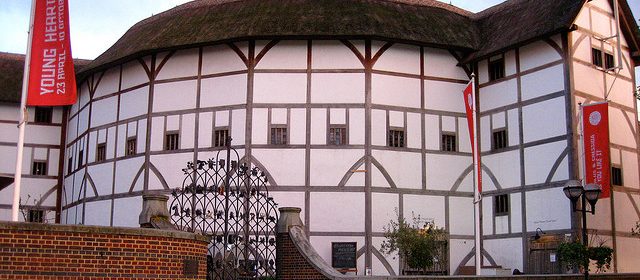
That post was about his Works, the whole point of what he was trying to achieve; which was it seems just making sure the theatre still had material and he could pay his way rather than looking for fame and immortality; in fact it’s likely that if he was brought to 2020 London and shown The Globe, the books and the videos it would be a massive surprise to him, let alone the fact his works are performed all round the actual globe in languages and countries he’d never heard of.

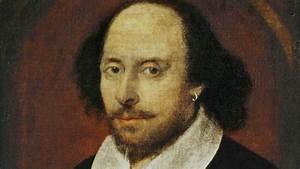
If you enjoy Shakespeare’s writings then of course the next step is to learn something out about the man. There are far more words written about him in many books and documentaries then he ever wrote himself. Of these there are two books I think that are great for either a starting point, or just a general containment of the facts in a clear and simple way.

First I’d recommend Bill Bryson’s Shakespeare (now subtitled The World As A Stage). Compared to some of Bryson’s works this is actually quite a slim volume, there is a reason for that. It seems there is a vast difference between what we think we know about Shakespeare, including myths and spurious stories, compared to what we do properly know as facts. Bryson (and the second book I will suggest) both avoid the apocryphal, only commenting on a myth to debunk it. No there isn’t any evidence that it was someone other than Shakespeare that wrote the plays, as a conspiracy it’s just an invention by people at the start of the 1800s and only hangs around for nay-sayers to point and feel superior.

Instead what we are given is the what facts we do know, or have a good chance of being true, most interestingly we have the context of the times and society as it was. It’s clearly written, the text is informative but not heavy going, and I’d suggest it’s one of the best books on Shakespeare’s life that I have come across. Chronological in it’s format it follows the life of this man as best we know it, including the impact that he was had on you and me which maybe we don’t know. You can read it in a couple of days even if you are taking it easy. The only slight issue I’d have is that, in my copy at least, there is no index so trying to find information again means wading through it once more. That aside this is a very good book.

“Perhaps nothing speaks more eloquently of the variability of spelling in the age than the fact that a dictionary published in 1604, A Table Alphabeticall of Hard Words, spelled “words” two ways on the title page.”
― Bill Bryson, Shakespeare: The World as Stage

The other book I’d recommend is Shakespeare On Toast by Ben Crystal. It might be an odd title but the point of it is that the information within is supposed to be easy, like a lunch of beans on toast. The first part of the book certainly delivers this promise and compliments Bryson’s volume in that it either fills in gaps or provides the same information but from the view of a performer rather than a historian. This would make sense as Ben Crystal is an actor.

There is an index in this book, as well as charts and simple boxed out explanations that make reading this in short intervals possible. Again the author goes to lengths to make sure what he is presenting is as accurate as possible. He also takes up the whole of Elizabethan life that is relevant and condenses it down to the basic facts that once known adds so much more colour to Shakespeare’s works. Did you know the difference between thou, thee, thy and you? Did you realise that the word “table” used to mean “notebook”?

It’s fascinating stuff… then you get to the second half of the book. Deciding to drop the general facts Crystal becomes a little obsessed with the rhythm of Shakespeare’s dialogue, this is NOT a bad thing because after reading just the first few pages of this explanation, you will too.

Crystal unlocks entire secrets hidden in Shakespeare’s works that actors would have seen all along. No I don’t mean conspiracies against the King or Queen, I mean stage directions that add a whole other dimension to the scripts. Because these are scripts not prose and Shakespeare wrote them for his friends to read and perform they would have had shortcuts that the actors would have understood but we wouldn’t.

What is iambic pentameter? How does the way Shakespeare used it to write the lines of the script show the personality of the characters? Trust me that might sound like a snore, but it’s so well explained, not just informative but entertaining. It’s a real revelation in Shakespearian writing, and you may find you attempt to speak or write in one of the pentameters for a while after, or is that just me?

“The Elizabethans watching one of Shakespeare’s plays would be relatively unaccustomed to seeing pictures or images – save perhaps a sign outside a tavern, a portrait or tapestry. In our time, unless you make an incredible effort, it’s impossible to turn a corner without seeing a photograph.”
― Ben Crystal, Shakespeare On Toast

For one of England’s most famous people it’s surprising how little we know about someone who has literally changed all our lives in one way or other, even if it’s just using the words he invented.

Buy Shakespeare (The World As A Stage) by Bill Bryson
Buy Shakespeare On Toast by Ben Crystal

Follow My Blog

Get new content delivered directly to your inbox.

Entertaining Shakespeare: Part One – Not Boring

I completely get why some may be put off, but here is why I think you should give it a go.

Every year I go and see at least one play by Shakespeare at the Globe. I love Shakespeare and have (in one form or another) seen all of his plays – lets not get into the cannon discussion but I include The Two Noble Kinsman. If you’ve never been and are in London (at a time when viruses are not playing havoc with society) I’d highly recommend an evening at The Globe Theatre. Tickets are very reasonably priced especially if you are standing. Personally I always book well in advance and get a seated ticket, you’re not in the main crowd for the fun and danger of being picked on by the actors, but at least you can sit down and as some of the plays can be long it’s worth the extra money.

It’s all academic at the moment anyway as they have, reasonably and understandably, currently shut their doors to the public until further notice. 2020 will be a gap in my unbroken record of many years where I have seen a play there at least once (it’s not the only thing that I have an annual tradition of that will be missing this year). It didn’t have to be because as well as the outdoor theatre for summer performances there is the very cool Sam Wanamaker Playhouse, an indoor intimate theatre for telling tales in the winter season, and I could have gone in January to see something.

However that doesn’t mean we can’t enjoy Shakespeare, there is the Globe Player (https://globeplayer.tv/) where you can stream from a catalogue of previous performances, it’s well worth it! Other theatre groups and performances are available and also worth looking out for, the RSC have teamed up with companies hosting streamed plays for example and there are some excellent options.

The suggestion of Shakespeare can turn people off, maybe they had to wade through it at school, or they are put off by the old language. I fully get that this can be overwhelming but I would still recommend you to watch at least one play to try it out. I say watch because for many who read it they find it hard to follow, this is because it’s not supposed to be read, it’s a play, it’s supposed to be watched. There is joy in reading the texts but this is not how William intended the public to access his work (yes I did just refer to him by his first name!). The scripts were meant for the actors so they could perform it.

The next question then is which play to see? There are around thirty-nine of them so just taking one at random can be fun, but as some are heavier going than others if you start with one that isn’t quite your thing you might be put off. Of course it all comes down to what you like. A few years ago the BBC had a success with the English Historical plays, broadcasting them as films in two cycles of three parts. Using well known actors these, although long, were very watchable and again if you are able to see them somehow you really should.

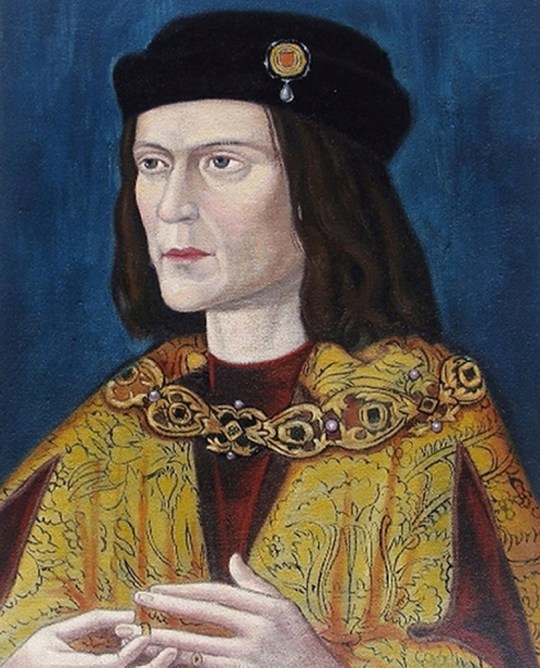
Going under the umbrella title of The Hollow Crown the second cycle (about the Wars of the Roses) is a great entry point, the last of the three films is an adaption of Richard III with Benedict Cumberbatch in the title role, this is one of my favourite plays anyway but this adaption still had me on the edge of my seat. If you’re thinking you are not a fan of history, I’d say although this is history (with a lot of poetic licence) it’s as compulsive viewing as many a period drama.

“Now is the winter of our discontent
Made glorious summer by this sun of York;
And all the clouds that lour’d upon our house
In the deep bosom of the ocean buried.”
― William Shakespeare, Richard III

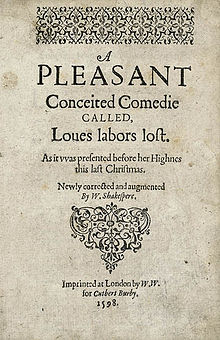
If that is still sounding a little hard going some of the Comedies are shorter and lighter work. Personally two of my favourites are Love’s Labours Lost –four students vow to give up seeking women so they can focus on study… then they meet the new neighbours and that vow suddenly seems hard work – the Globe version on their Player had me keep having to pause it as I laughed so much at various points, and The Comedy of Errors – deliberately confusing cases of mistaken identity as two sets of twins (who were separated at birth) all happen to end up in the same city at the same time but don’t know it… and much hilarity ensues. The Comedy of Errors is his shortest play; to put that in context Hamlet (one of the most well known plays) is his longest at over twice the length!

“They have been at a great feast of languages, and stolen the scraps.”
― William Shakespeare, Love’s Labour’s Lost

Although there is a lot of concepts about exactly what a Shakespeare play is, when you investigate you can see how diverse they are. The old idea of putting them all in one of the three categories of Comedy, Tragedy, and Historical doesn’t really work as many of the plays blur those lines. Earlier I said there are around thirty-nine plays, the reason there isn’t an exact number is because there is discussion over what counts as a Shakespeare play; some were co-written, for others he was part of a team of writers and may have only contributed a little and there are cases where for a couple of plays it’s not exactly certain how much involvement he did have. To be honest if you are just wanting to be entertained I don’t think that’s something worth worrying about, most of the obvious ones are by him so there is no conspiracy here, something I’ll go on to discuss in the second part of this blog.

At the end of day the idea that Shakespeare is boring, I believe, is because many were forced to read the dry texts at school and then analysis them. This is, as I said, not what was intended when they were written. To enjoy Shakespeare you need to watch it live, we can’t really do it that at the moment but I highly recommend tracking down at least one of his plays online, you may discover it’s a lot more entertaining than you realised.

Buy The Complete Works Of William Shakespeare
Watch Shakespeare’s Plays

Follow My Blog

Get new content delivered directly to your inbox.